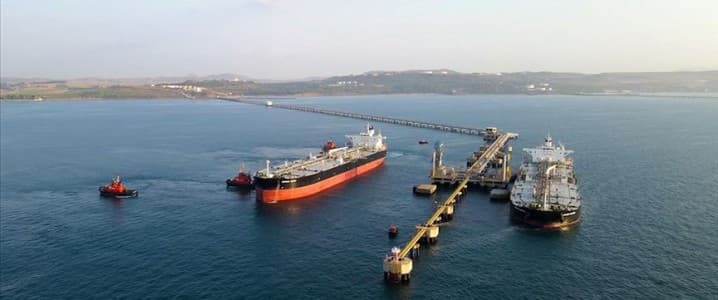
Global oil markets are once again under pressure as geopolitical tensions in the Middle East flare up, pushing Brent crude above $100 per barrel. The spike follows reports that Iran’s Islamic Revolutionary Guard Corps (IRGC) seized commercial vessels in the Strait of Hormuz, a critical oil shipping route. Brent crude climbed to $101.40 while WTI rose to $92.52, reflecting how quickly markets are reacting to developments in the region.
Despite diplomatic efforts, including an extended ceasefire announcement tied to U.S.-Iran negotiations, uncertainty continues to dominate trading sentiment. The seized vessels—reportedly Panama- and Liberia-flagged—along with reported attacks on a third ship, have intensified fears of supply disruption. Analysts say the Strait of Hormuz remains one of the most sensitive chokepoints for global energy flows, making even small incidents highly impactful on prices.
According to Standard Chartered, Brent crude appears to be settling around a new “equilibrium” level of about $95 per barrel. The bank notes that prices have repeatedly hovered near this mark in recent trading sessions, reflecting a balance between hopes of de-escalation and ongoing supply tightness. Strong backwardation in the forward curve also signals that near-term supply remains constrained compared to future expectations.
The disruption has already forced production adjustments across parts of the Gulf, with some countries reportedly cutting output significantly due to restricted transit routes. While OPEC+ continues to refine its production strategy—including a new “Maximum Sustainable Capacity” metric aimed at improving transparency—analysts expect structural tightness to persist. Standard Chartered projects that oil prices could remain $10–$20 higher than pre-conflict levels even after tensions ease.

Interestingly, not all energy markets are moving in the same direction. Natural gas prices in both the U.S. and Europe have softened despite the broader conflict, supported by strong supply and storage levels. However, analysts warn that competition between Europe and Asia for gas shipments during peak demand seasons could still push prices higher in the months ahead, especially as long-term demand grows from sectors like LNG exports and data-center power usage.
source: oilprice