
Trump’s Secondary Tariffs on Russia’s Oil Buyers Risk Global Market Disruption and Diplomatic Strains

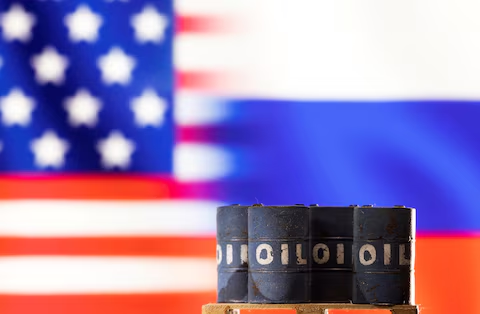
U.S. President Donald Trump has imposed secondary tariffs targeting countries that import Russian oil, with a 25% tariff already applied to India’s imports and potential similar measures expected against China. This marks a strategic use of tariffs as a foreign policy tool aimed at pressuring Russia to cease its war efforts in Ukraine by cutting off critical revenue sources. However, experts warn these tariffs may have limited impact on Russia’s stance, as Putin appears ready to endure economic hardships and continue the conflict.
While these tariffs are designed to financially punish Russia by restricting its oil exports, they carry substantial economic and political risks for the U.S. Increased oil prices from disrupted supplies could fuel inflation, posing problems for Trump ahead of the 2026 U.S. midterm elections. Additionally, the tariffs risk damaging diplomatic relations with key countries like India and China, complicating ongoing efforts to negotiate trade agreements with these major oil importers.
Russia has mitigated previous sanctions through rerouting oil exports to India and China at discounted prices, and analysts are skeptical that these secondary tariffs will prompt Moscow to change course. Some U.S. officials suggest talks between Trump and Putin might occur soon, but many experts doubt any ceasefire will materialize. Despite economic pressures, Putin faces minimal domestic backlash, making it unlikely that tariffs alone will alter his war strategy.
The tariffs could provoke retaliatory moves from Russia, including potential shutdowns of crucial pipelines like the CPC pipeline from Kazakhstan, which supplies up to 1.7 million barrels per day. Such disruptions could trigger significant spikes in global oil prices, worsening inflation worldwide and threatening energy security. Industry analysts emphasize the difficulty of replacing Russian oil quickly and warn that these economic shocks could impact the broader global economy.
Ultimately, while Trump’s tariff strategy might resonate politically as a tough stance against Russia, the approach involves high stakes with uncertain benefits. The move may pressure Russia financially but risks straining vital international partnerships and destabilizing oil markets, illustrating the complex balance between geopolitical objectives and economic realities in U.S. foreign policy.
Source: Reuters