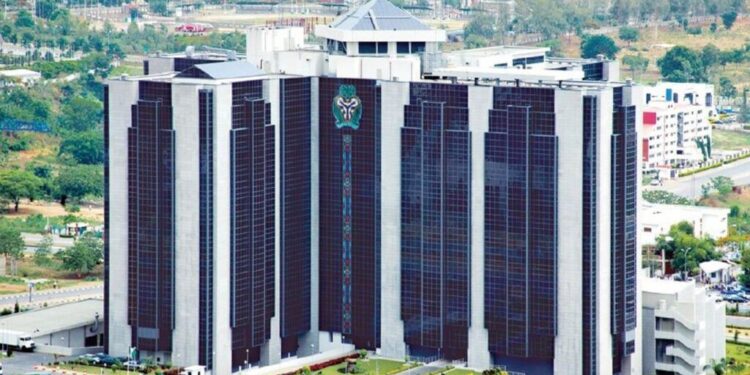
Economists have renewed calls for the Central Bank of Nigeria (CBN) to reconsider its 45 per cent Cash Reserve Ratio (CRR) for deposit money banks, as Nigeria’s foreign exchange reserves climb to an 18-year high and inflation continues to moderate. The debate comes as external reserves reportedly reached $54.6 billion as of September 14, 2026, while headline inflation eased to 15.39 per cent in August. The CBN, however, has maintained the 45 per cent CRR for deposit money banks, alongside a 16 per cent requirement for merchant banks.
Chief Executive Officer of Economic Associates, Ayo Teriba, argued that the economic conditions that initially justified aggressive monetary tightening have changed significantly. He said Nigeria has moved beyond the severe foreign exchange and fiscal pressures that accompanied the earlier tightening cycle, pointing to the improvement in the country’s net foreign reserves and the reduction in outstanding obligations. Teriba therefore called for the CRR to be reduced significantly, or potentially eliminated, to give banks greater room to channel deposits into productive lending.
The economist also raised concerns about the amount of liquidity being locked up through CRR debits. According to him, CRR debits have risen from about N14 trillion in 2023 to almost N28 trillion, while additional liquidity has been sterilised through the CBN’s Special Deposit Facility. He argued that with the banking sector having undergone recapitalisation and some of the earlier fiscal pressures easing, maintaining such a high reserve requirement could be limiting the ability of banks to support businesses and economic activity.
The concerns have also been echoed by financial sector analysts. Chapel Hill Denham reportedly estimated that Nigeria’s high CRR could be costing the banking industry as much as N2.5 trillion annually in lost earnings. The firm noted that reserve requirements in several other emerging and African economies are considerably lower, while projecting that a reduction in Nigeria’s CRR could release significant liquidity into the banking system. The World Bank has also recommended a gradual reduction in Nigeria’s high CRR, saying this could ease liquidity pressures, improve credit allocation and lower borrowing costs for businesses and households.

Despite the calls for easing, the CBN has maintained its cautious approach. At its July 2026 Monetary Policy Committee meeting, the bank retained the CRR for deposit money banks at 45 per cent, the MPR at 26.5 per cent and the Standing Facilities Corridor at +50/-450 basis points. The decision reflects the MPC’s continued focus on ensuring that the recent moderation in inflation is sustained before making a major shift in monetary policy. With reserves strengthening and inflation slowing, attention is now increasingly focused on how the CBN balances price stability with the need to improve credit availability and support economic growth.
source: Leadership