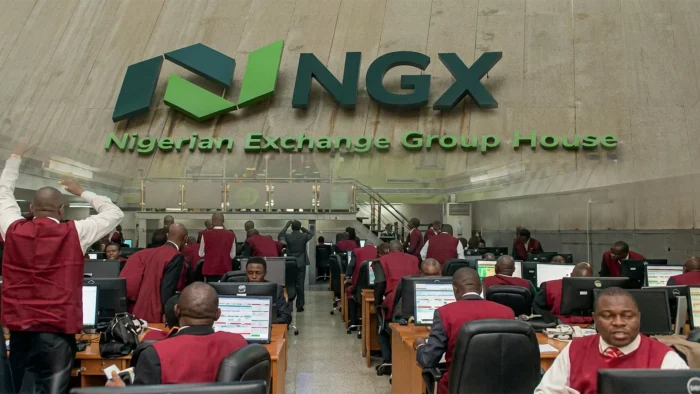
The Nigerian equities market came under intense pressure last week as investors collectively lost about N5.64 trillion on the Nigerian Exchange Limited (Nigerian Exchange Limited), following a wave of sustained sell-offs that weakened sentiment across key sectors. The downturn has sparked fresh concern among market participants already navigating a volatile trading environment.
The All-Share Index (ASI) dropped by 3.59% week-on-week to close at 235,941.27 points, while market capitalisation fell to N151.33 trillion. Despite the decline, the market’s year-to-date return still stood at 51.62%, reflecting earlier gains that have now been partially eroded by recent profit-taking.
Trading activity showed mixed signals. While total volume traded fell sharply by 38.04%, the value of transactions and number of deals increased by 22.73% and 21.7% respectively. This suggests investors were still active in the market but increasingly selective, shifting portfolios rather than exiting completely. A total of 3.08 billion shares worth N254.79 billion were exchanged across 287,541 deals during the week.
Sector performance painted a largely bearish picture, with almost all major indices closing in the red. Banking stocks led the decline, dropping 10.49%, followed by insurance at 7.22% and industrial goods at 4.11%. Consumer goods, oil and gas, and commodities also recorded losses, reinforcing the broad-based nature of the sell-off across the market.

Despite the downturn, a few stocks managed to post gains, with Royalex rising 13.3% as the week’s top performer, while Enamelwa, Learn Africa, and Neimeth gained 10% each. However, losses were more severe on the downside, with Intenegins plunging 40.4%, highlighting the sharp divergence in investor sentiment. Analysts say the market is likely to remain under pressure in the short term as investors continue profit-taking after earlier rallies, with sentiment now shifting toward caution and capital preservation.
source: The Guardian