

Across Africa, a strange economic contradiction is unfolding: countries rich in natural gas reserves continue to suffer widespread energy poverty. Despite holding over 200 trillion cubic feet of gas in Nigeria alone, millions of households and businesses remain without reliable energy, relying instead on charcoal and diesel generators. This growing imbalance is not due to scarcity but what experts describe as a deeply misaligned commercial gas model that prioritises exports over domestic needs.
The consequences are becoming increasingly visible across West Africa. In Benin, officials warn that gas demand will surge far beyond supply within the decade, leaving an estimated 82% deficit by 2030. Key industrial projects like the Glo-Djigbé Industrial Zone risk stalling due to insufficient gas access, while power generation alone will consume nearly all available supply. Similar challenges are unfolding in Togo, where gas shortages are driving up electricity costs, increasing emissions, and discouraging industrial investment.
Nigeria reflects the same structural contradiction on a larger scale. While the country exports liquefied natural gas to global markets, domestic industries struggle to access affordable and reliable supply. As a result, manufacturers are forced to depend on diesel, a far more expensive alternative that costs up to five times more per kilowatt-hour. The Manufacturers’ Association of Nigeria estimates that businesses spent over ₦1.2 trillion on alternative energy in a single year, a burden that quietly erodes competitiveness across the economy.
The problem extends beyond power generation into agriculture and household welfare. Natural gas, which is essential for fertiliser production, remains underutilised domestically, forcing many African countries to import fertilisers at high global prices while their own farmers struggle with low productivity. At the same time, millions of households cannot afford clean cooking gas and rely on charcoal, reducing disposable income and worsening environmental degradation. Experts argue that this misallocation is not just an energy issue but a direct constraint on food security, industrialisation, and poverty reduction.

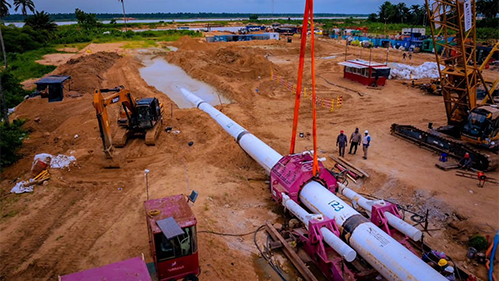
To correct the imbalance, stakeholders are calling for urgent reforms, including cost-reflective domestic pricing, improved cross-border regulatory coordination, and massive investment in gas infrastructure such as pipelines and mini-LNG networks. Institutions like the World Bank and industry leaders agree that financing alone is not enough without policy alignment. Ultimately, experts warn that unless Africa restructures its gas market to prioritise domestic utilisation, the continent risks remaining resource-rich but economically constrained, unable to convert its energy wealth into real industrial growth.
source: The Guardian