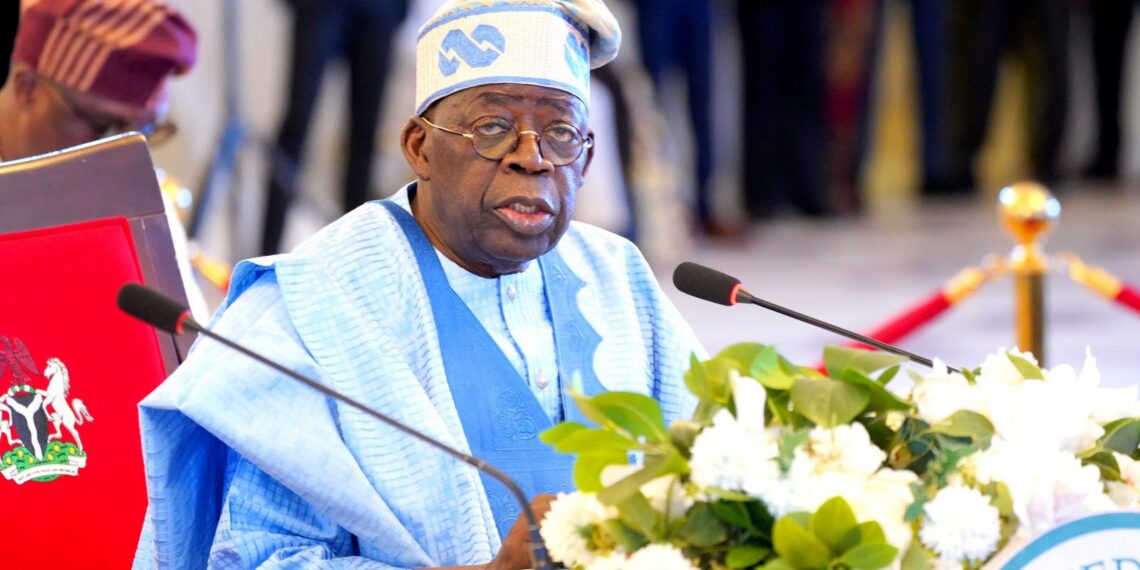
President Bola Ahmed Tinubu has blamed high borrowing costs, illicit financial flows, and restrictive global financial policies for the slow growth of Africa’s manufacturing sector. Speaking at the Africa Forward Summit in Nairobi, Kenya, Tinubu said African economies continue to face major financial barriers that limit industrial development and competitiveness.
According to a statement released by presidential spokesperson Bayo Onanuga, the Nigerian leader addressed representatives from over 30 countries during a session focused on financing industrial development. The summit was co-hosted by Emmanuel Macron and William Ruto. Tinubu called for urgent reforms to the global financial system, arguing that current structures place African manufacturers at a disadvantage compared to businesses in Europe, Asia, and North America.
The President noted that Africa contributes less than 2% to global manufacturing because many countries on the continent still rely heavily on exporting raw materials while importing finished products. He questioned how African manufacturers can compete globally when borrowing costs across the continent remain significantly higher than those in developed economies. Tinubu warned that the international financial system risks losing relevance if it fails to address these structural inequalities affecting developing nations.
Tinubu also highlighted Nigeria’s ongoing economic reforms, including the removal of fuel subsidies, exchange rate unification, and a banking recapitalisation programme valued at over $45.5 billion. While the reforms are designed to restore investor confidence and stabilise the economy, he said rising debt servicing obligations continue to reduce the government’s ability to invest in infrastructure and industrialisation. Nigeria is expected to spend about $11.6 billion on debt servicing in 2026, further tightening fiscal space for critical sectors.

Beyond manufacturing, the President promoted Nigeria’s blue economy strategy as a driver of regional economic growth and maritime security. He pledged to make Nigeria’s Deep Blue Project infrastructure available to Gulf of Guinea countries as a regional maritime intelligence hub. Tinubu also stressed the need for African nations to invest in infrastructure, agriculture, energy, digital skills, and job creation to tackle the root causes of irregular migration and drive sustainable economic development across the continent.
source: nairametrics