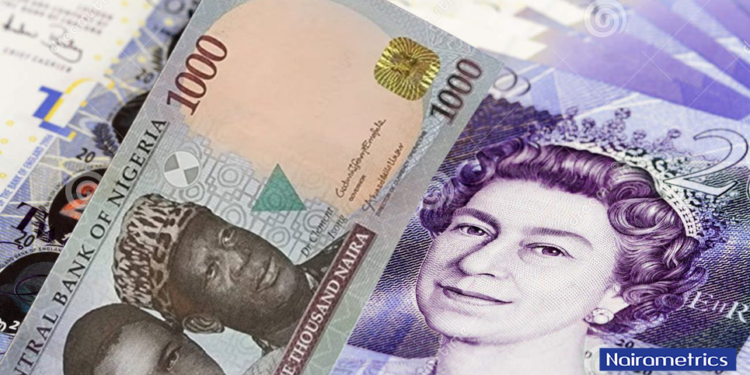
The Nigerian naira has staged a modest recovery against the British pound, trading at N1,858/£1 in the official market, according to the latest data from the Central Bank of Nigeria (CBN). This marks a gain of N38 from its recent low of N1,896/£1 recorded on April 29, signaling renewed strength in the local currency after weeks of pressure.
Market analysts say the naira’s rebound reflects improved foreign exchange inflows, particularly from crude oil sales, alongside continued intervention by the apex bank. While the currency pair has remained relatively stable in recent sessions, traders are watching closely for potential volatility driven by oil price movements, global risk sentiment, and monetary policy decisions in both Nigeria and the United Kingdom.
Technical indicators suggest the naira may be consolidating, with price movements hovering around key levels. Analysts note that if resistance at N1,850/£1 holds, the naira could weaken again toward N1,900/£1. However, sustained CBN interventions and improved liquidity could support further gains in the near term.
Despite the improvement in the official market, demand for the British pound remains elevated in the parallel market, where it is currently quoted around N1,910/£1. This gap continues to be driven by strong demand from students, travelers, and businesses seeking foreign exchange for overseas commitments, especially related to education and tourism in the UK.

Globally, the pound has maintained strength, supported by the Bank of England’s firm stance on inflation. With UK interest rates held at 3.75% and hints of possible hikes, the currency remains attractive to investors. At the same time, geopolitical tensions in the Middle East and upcoming U.S. economic data could influence currency movements. While the naira shows signs of resilience, analysts caution that seasonal demand pressures and external shocks could still pose risks in the coming months.
source: nairametrics