

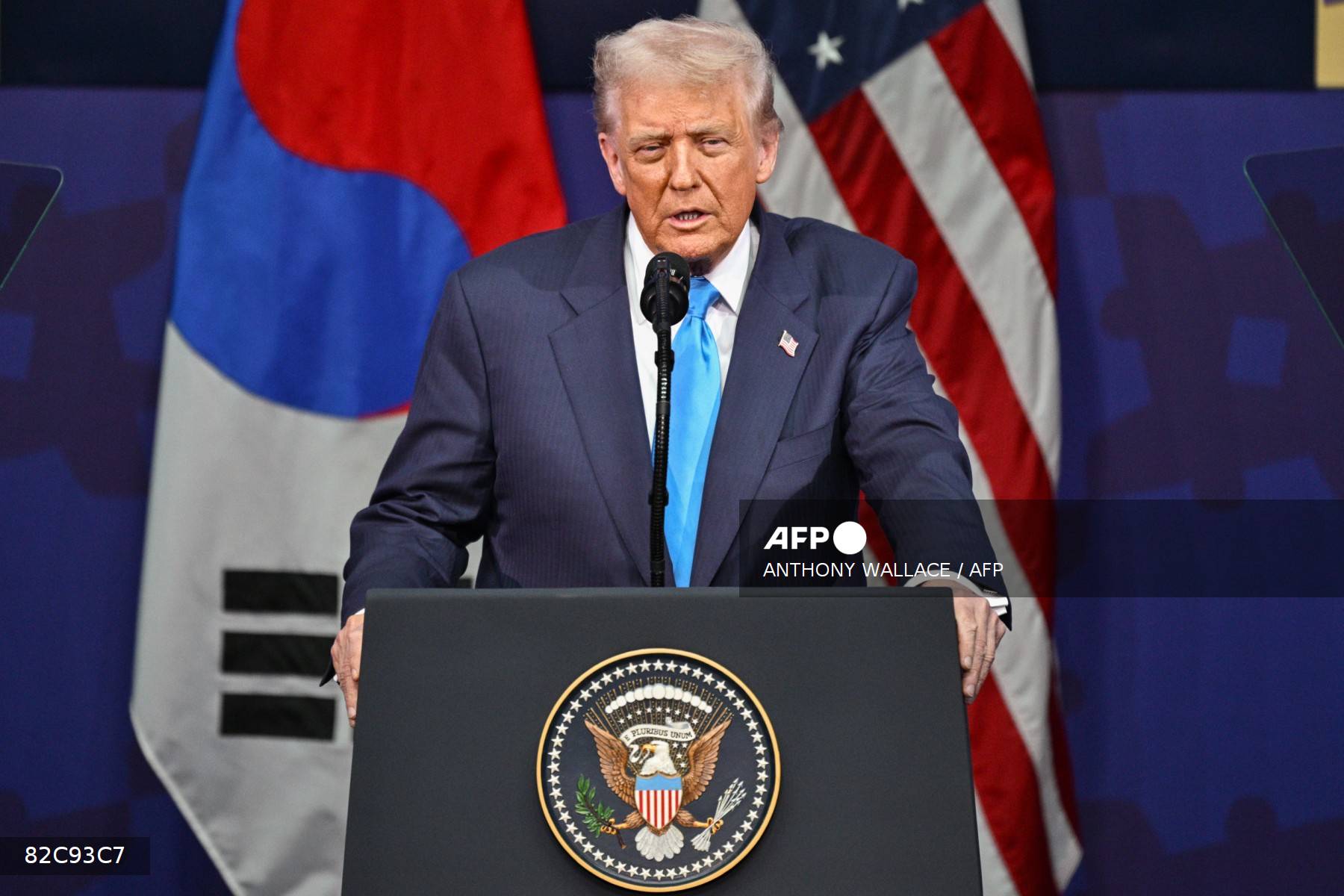
Nigeria’s financial markets opened November 2025 under pressure as the naira and equities fell sharply following remarks by US President Donald Trump threatening possible military action over alleged religious persecution in the country. Investors reacted swiftly, reflecting heightened anxiety over geopolitical uncertainty and the potential economic impact.
Data from the Central Bank of Nigeria showed that the naira, which had traded at a 2025 peak of N1,421.73/$, depreciated to N1,436.34/$ on Monday, a 1.03 per cent drop in a single day. The currency also weakened in the parallel market to N1,455/$, signaling growing demand for dollars and reduced investor confidence.
Trump, in statements over the weekend on his Truth Social platform, labeled Nigeria a “country of particular concern” and instructed the US Department of War to prepare for “possible action” if the alleged killings of Christians continued. His remarks, describing the situation as a “Christian genocide,” have sparked global debate and left markets uncertain about the future of US–Nigeria relations.
The effects quickly rippled through Nigeria’s equities and bond markets. At the Nigerian Exchange Limited, the All-Share Index dropped 0.25 per cent to close at 153,739.11 points, erasing some year-to-date gains, while market capitalization declined by N245.88 billion. Selling pressure was led by Aradel Holdings and Access Corporation, though a few stocks, including Union Dicon, posted gains. Meanwhile, investor appetite for Nigeria’s Eurobonds weakened, with yields rising amid global risk aversion.

Analysts remain divided on the long-term impact. Tilewa Adebajo of CFG Advisory described the market reaction as “a mere blip,” citing Nigeria’s removal from the FATF Grey List as a positive signal. Conversely, Dr. Musa Yusuf of the Centre for the Promotion of Private Enterprise warned that Trump’s threats could undermine confidence, stressing that stability will require diplomacy, strong governance, and consistent macroeconomic policies.
source: punch