
CBK Set to Hold Interest Rates Steady as Inflation Eases and Economic Growth Slows

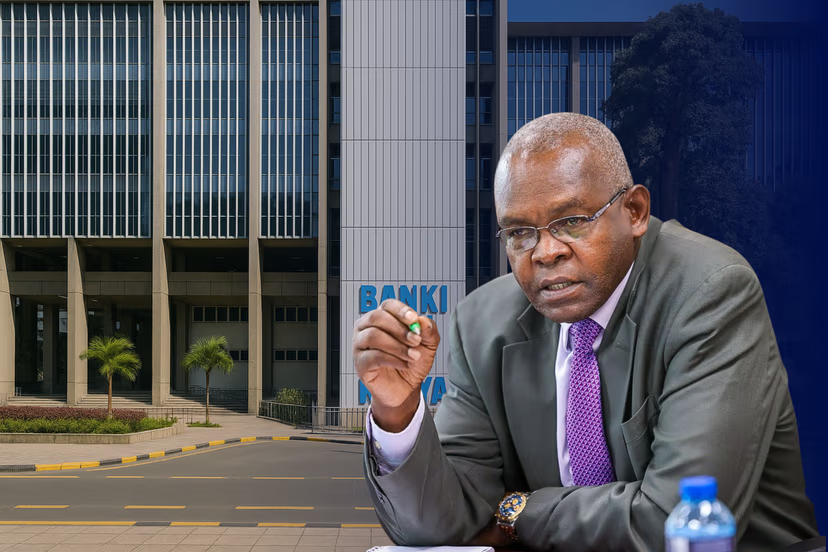
The Central Bank of Kenya (CBK) is widely expected to maintain its benchmark interest rate at its August 2026 Monetary Policy Committee (MPC) meeting, as policymakers weigh stable inflation against slowing economic growth and ongoing global uncertainties. According to Nairobi-based research analyst Parminder Kaur Umesh, there is currently little justification for either cutting or raising interest rates, making a prolonged policy pause the most likely outcome. The decision reflects a cautious balancing act between supporting economic recovery and safeguarding price stability.
Kenya’s inflation outlook has become more favorable in recent months, easing concerns that had emerged earlier following geopolitical tensions in the Middle East. Headline inflation slowed to 6.4% in June from 6.7% in May, remaining comfortably within the CBK’s target range. A decline in global oil prices after reduced tensions between the United States and Iran has eased fears of imported inflation, giving the central bank more flexibility to maintain its current policy stance. Although core inflation has edged higher, analysts say broader price pressures remain well contained due to subdued domestic demand and a stable Kenyan shilling.
Economic conditions at home also support the case for leaving interest rates unchanged. Kenya’s growth forecast for 2026 has been revised downward to 4.9% from 5.3%, reflecting softer economic activity despite strong agricultural performance. At the same time, private sector lending remains weak, with credit growth slowed by cautious borrowing, elevated non-performing loans, and uncertainty ahead of the country’s 2027 general elections. These factors suggest that tightening monetary policy could further dampen economic activity without delivering significant inflation benefits.
Kenya’s strong external financing position has further strengthened the CBK’s room for maneuver. The government has secured significant financial support through a $750 million World Bank Development Policy Operation, a JPY25 billion Samurai financing facility, and expected funding from the African Development Bank. Together with foreign exchange reserves covering roughly six months of imports and ample liquidity across the banking sector, these developments have reduced pressure on policymakers to intervene aggressively. Analysts believe the biggest challenge to economic expansion is not limited access to funding but rather cautious borrowing and slower demand for credit.
Looking ahead, the central bank is expected to continue closely monitoring global oil prices and geopolitical developments that could reignite inflationary pressures. If energy prices remain stable, inflation is likely to stay within the CBK’s target range, reinforcing expectations that interest rates will remain on hold for the foreseeable future. For investors and financial markets, a steady policy stance is expected to keep Treasury bill and short-term bond yields relatively stable while providing businesses and consumers with greater certainty during an increasingly uncertain global economic environment.
source: kenyanwallstreet