

NEC Calls for Unity and Delivery-Focused Reforms in Nigeria’s $1 Trillion Economy Drive

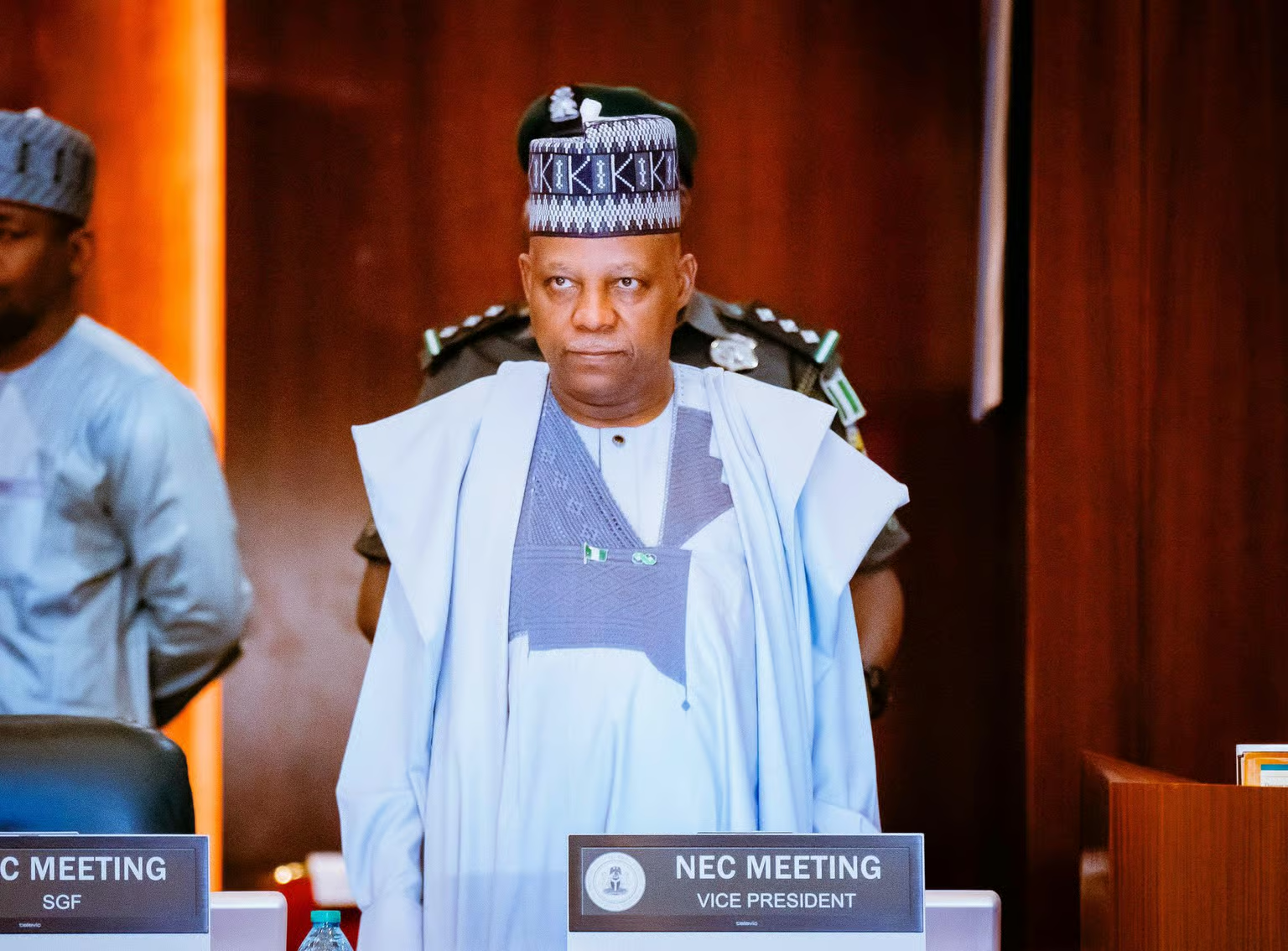
Nigeria’s drive to become a $1 trillion economy took center stage yesterday as the National Economic Council (NEC) concluded its second annual conference in Abuja, emphasizing the need for delivery-driven reforms, coordinated fiscal policies, and strategic investment in human capital and infrastructure. The two-day gathering brought together over 350 participants, including federal and state officials, private sector leaders, development partners, and civil society actors, all focused on aligning sub-national strategies with the nation’s long-term economic goals.
President Bola Tinubu, through a message delivered by Senate President Godswill Akpabio, stressed that economic reforms must go beyond talk. He highlighted the importance of translating policies into tangible benefits for citizens, including job creation, business growth, stronger institutions, improved healthcare, and expanded opportunities across all states. Akpabio, who officially closed the conference, described the Renewed Hope Agenda as “not a slogan but a national commitment,” underlining that reforms should enhance daily living standards.
Vice President Kashim Shettima, who chairs the NEC, was commended for his steady leadership and clear guidance throughout the discussions. Delegates emphasized that achieving the $1 trillion economy target would require disciplined fiscal management, macroeconomic stability, domestic production growth, and technology-driven productivity. The conference also highlighted the importance of sustained collaboration between federal and state governments, as well as active private sector participation, to build a more resilient and diversified economy.
However, the Central Bank of Nigeria (CBN) issued a cautionary note on the country’s economic trajectory. Governor Yemi Cardoso warned that persistent excess liquidity in the financial system, combined with expansionary election-cycle spending, could undermine macroeconomic stability. He noted that while recent monetary tightening and policy interventions have stabilized markets, structural imbalances—exacerbated by intervention programs totaling N10.93 trillion—continue to challenge liquidity management and could trigger renewed inflationary pressures.

Cardoso stressed that safeguarding Nigeria’s economic gains would require disciplined liquidity control, coordinated fiscal policies, and sustained structural reforms. He added that reforms are not one-off events but a continuous process requiring courage, patience, and consistency. As the NEC conference concluded, there was a shared optimism that with committed implementation, strategic partnerships, and strengthened accountability mechanisms, Nigeria could stay on track to achieve its ambitious $1 trillion economy milestone.
source: The Guardian