

Nigeria Non-Oil Exports Hit $6.1 Billion in 2025 as Country Boosts Global Trade Presence

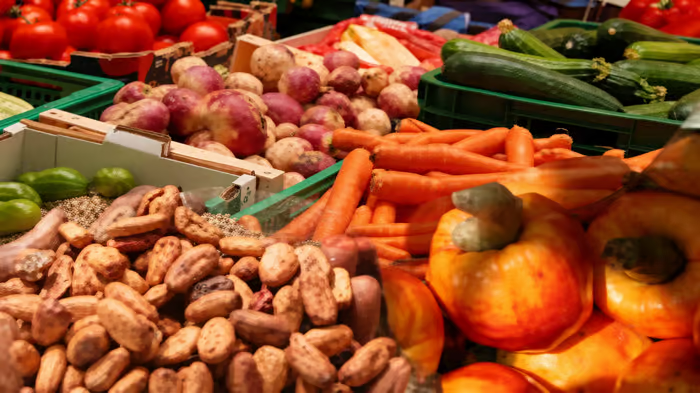
Nigeria’s non-oil export sector achieved a historic milestone in 2025, recording total earnings of $6.1 billion—an 11.5% increase from the $5.4 billion reported in 2024. The growth reflects the country’s ongoing push to diversify its economy beyond crude oil, with higher export volumes and broader access to international markets boosting the nation’s global trade footprint.
Nonye Ayeni, Executive Director and CEO of the Nigerian Export Promotion Council (NEPC), emphasized that the achievement marks the highest value ever recorded for Nigeria’s formal non-oil exports in nearly 50 years. The growth was supported by a 10% rise in export volumes, totaling 8.02 million metric tonnes in 2025, compared to 7.29 million metric tonnes the previous year. Nigeria exported 281 non-oil products, signaling a shift toward value addition and wider participation in global trade.
Despite these gains, the World Bank warns that Africa’s reliance on just a few staple foods—cassava, rice, maize, and wheat, which provide 45% of the continent’s calories—poses vulnerability to supply disruptions and rising food prices. A significant portion of these staples is imported from Europe, South Asia, and other regions, making transport, storage, and logistics critical to food security.
The World Bank report, Food at a Crossroads: The Nexus Between Transport, Logistics, and Food Security in Africa, highlighted that delays at seaports and along inland transport networks increase spoilage and costs. In Africa, food travels an average of 4,000 kilometers over 23 days—four times longer than in Europe—limiting efficiency and raising prices for households. Improved infrastructure, modern storage, and better logistics could help reduce losses and improve food availability across the continent.

On the domestic front, Nigeria still faces significant challenges in ensuring food security. The FAO projects that about 34.7 million Nigerians could experience severe food shortages during the 2026 lean season from June to August. While the non-oil export sector shows promising growth, the country’s ability to fully leverage its production and reduce reliance on imports will depend on continued investment in agriculture, logistics, and trade infrastructure.
source: The Guardian