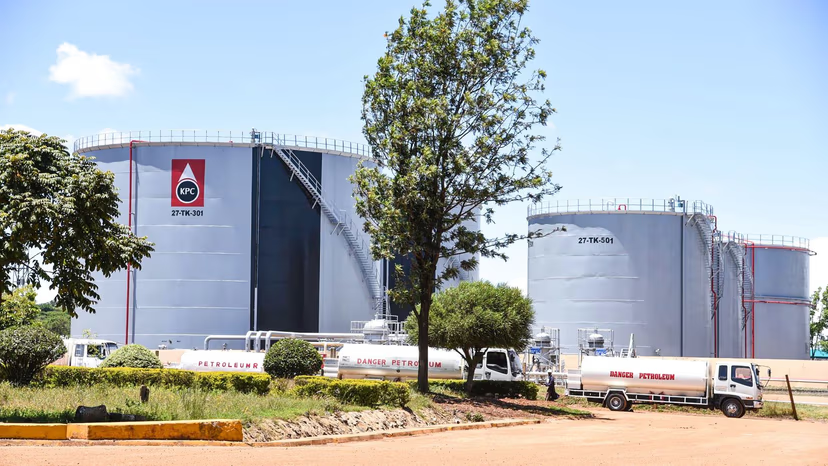
Kenya Pipeline Company (KPC) is set to deepen its role in Kenya’s emerging oil industry after its subsidiary, Kenya Petroleum Refineries Limited (KPRL), signed a 25-year crude oil storage and handling agreement with Gulf Energy E&P B.V. The long-term deal is projected to generate about KSh93.68 billion in revenue, strengthening Mombasa’s position as a key gateway for Kenya’s planned crude oil exports.
Under the agreement, KPRL will receive, store, handle and deliver crude oil for export through the Kipevu Oil Terminal II (KOT II). KPC said the projected revenue will come from fixed service fees and the recovery of qualifying variable costs. However, the company cautioned that the KSh93.68 billion estimate is based on assumptions around crude oil throughput and tariffs and is therefore not guaranteed.
The deal is closely tied to the planned development of Kenya’s South Lokichar oil fields in Turkana, which are now operated by Gulf Energy following its acquisition of Tullow Oil’s Kenyan interests. The government’s development plan targets initial crude production of about 20,000 barrels per day, with output expected to rise to 50,000 barrels per day during the second phase. First oil is currently targeted for December 2026.
The new arrangement also marks a shift from earlier plans to construct a crude oil pipeline linking Lokichar to Lamu. Under the current plan, crude from Turkana will be transported by road or rail to KPRL in Mombasa, where it will be stored before being transferred to KOT II for export. The development gives fresh commercial purpose to KPRL, whose refinery operations have been idle since 2013. KPC’s acquisition of the facility added 484 million litres of storage capacity and 377.7 acres of land near the Port of Mombasa.

Meanwhile, KPC has revised its service-level agreement with the Kenya Ports Authority for the operation and maintenance of KOT II. The updated agreement sets out clearer responsibilities for operations, performance monitoring, maintenance coordination and business continuity. Although KPC said the revised arrangement has no significant direct monetary value, it is considered important to ensuring the smooth operation of the terminal as Kenya prepares for commercial crude oil production and exports.
source: kenyanstreet