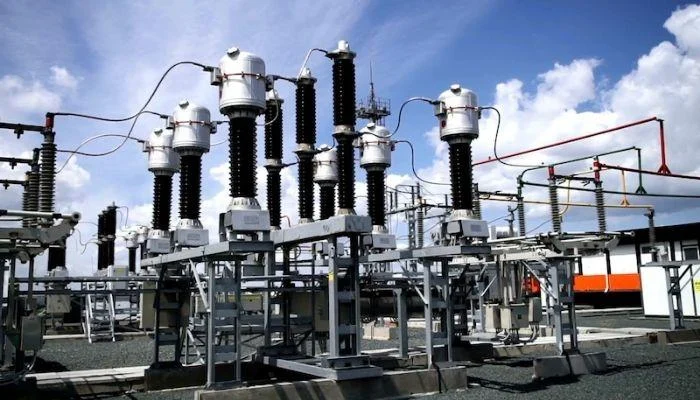
The Federal Government has set an ambitious target of 8,000 megawatts (MW) of electricity generation and transmission by the end of 2027, as it intensifies efforts to tackle Nigeria’s long-running power supply challenges. Minister of Power, Joseph Tegbe, announced the target on Wednesday in Abuja, saying the government hopes to increase the amount of electricity successfully wheeled across the country from about 5,000MW currently to 6,500MW by the end of 2026.
Speaking at the launch of the Renewable Energy Assets Management Company (RAMCO) by the Rural Electrification Agency, Tegbe said the government was determined to move Nigeria closer to reliable, round-the-clock electricity. He acknowledged the country’s long-standing struggle despite its abundant energy resources and installed infrastructure, but expressed optimism that recent improvements were only the beginning. According to him, the administration hopes Nigerians will soon reach a point where 24/7 electricity becomes a reality.
A major part of the strategy will be the new RAMCO model, which is designed to improve the management, sustainability and performance of renewable energy infrastructure. Tegbe said the approach would eventually extend beyond renewable projects to the wider electricity grid, with greater emphasis on professional management, accountability and reliable service. The government also plans to combine conventional grid supply with embedded generation, renewable energy, energy storage and other technologies suited to different communities and economic clusters.
For communities still outside the reach of the national transmission network, the government plans to deploy mini-grids and distributed renewable energy systems. Tegbe said areas without transmission lines would increasingly be served through mini-grids, giving renewable energy a bigger role in the country’s future power mix. The move could also help expand electricity access in underserved communities while reducing the pressure on the traditional grid.

Beyond simply keeping the lights on, the government says its larger ambition is to use reliable electricity as a foundation for economic growth. Tegbe pointed to manufacturing, artificial intelligence and data centres as sectors that will require significant and dependable energy supplies. He said the success of the reforms would not be judged only by the number of megawatts generated, but by how reliably and sustainably that electricity reaches Nigerians and businesses. With the 8,000MW target now set for 2027, the bigger question is whether the reforms can turn Nigeria’s enormous power potential into dependable electricity for homes, businesses and the digital economy.
source: punch