

The Federal Government has announced plans to publish a comprehensive breakdown of how funds saved from the removal of petrol and foreign exchange subsidies have been spent, in a move aimed at boosting transparency and restoring public confidence in Nigeria’s ongoing economic reforms.
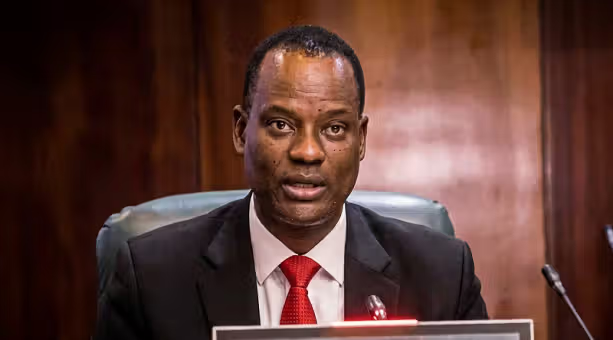
Speaking at the seventh Africa Emerging Markets Forum in Abuja, Minister of Finance and Coordinating Minister of the Economy, Taiwo Oyedele, acknowledged that many Nigerians have repeatedly questioned what became of the money saved from ending fuel subsidies. He described the concern as both understandable and justified, assuring citizens that the government would soon release a detailed analysis of the subsidy savings and their allocation. According to him, transparency is a responsibility the government owes every Nigerian.
Oyedele explained that the combined cost of petrol and foreign exchange subsidies previously consumed about five percent of Nigeria’s Gross Domestic Product (GDP). While removing the subsidies created fiscal savings, he stressed that the reforms were primarily designed to eliminate corruption, market distortions, and unsustainable government spending. He revealed that much of the savings has been used to finance obligations previously covered through Central Bank funding, service rising debt costs, and implement the new national minimum wage. He added that ending the practice of financing government expenditure through money creation required alternative funding sources, making the subsidy savings crucial to maintaining fiscal stability.
The finance minister also disclosed that the Ministry of Finance and the Central Bank of Nigeria (CBN) have strengthened their collaboration to ensure fiscal and monetary policies are based on shared economic assumptions. He noted that aligning projections on inflation and other key economic indicators would reduce policy conflicts and improve decision-making. In addition, Oyedele said the government is developing a framework to reduce borrowing costs for businesses without bringing back subsidy programmes, a move expected to encourage investment and stimulate economic growth.
Addressing concerns over rising poverty, Oyedele challenged the World Bank’s assessment that recent reforms had worsened living conditions. While admitting that subsidy removal temporarily reduced purchasing power, he argued that the reforms have laid the groundwork for stronger economic growth and higher incomes over time. He further revealed that the government is tackling excessive regulation, bureaucracy, and policy inconsistency, which preliminary studies suggest cost the economy more than the combined revenue generated from VAT, Company Income Tax (CIT), and Personal Income Tax (PIT). Looking ahead, he said the Federal Government’s priorities remain improving revenue generation, sustaining fiscal discipline, accelerating economic growth, and launching a public data portal to provide Nigerians with greater access to reliable economic information.
source: The cable