
CBN Explains N100, N200 Note Scarcity as Digital Payments Gain Ground in Nigeria

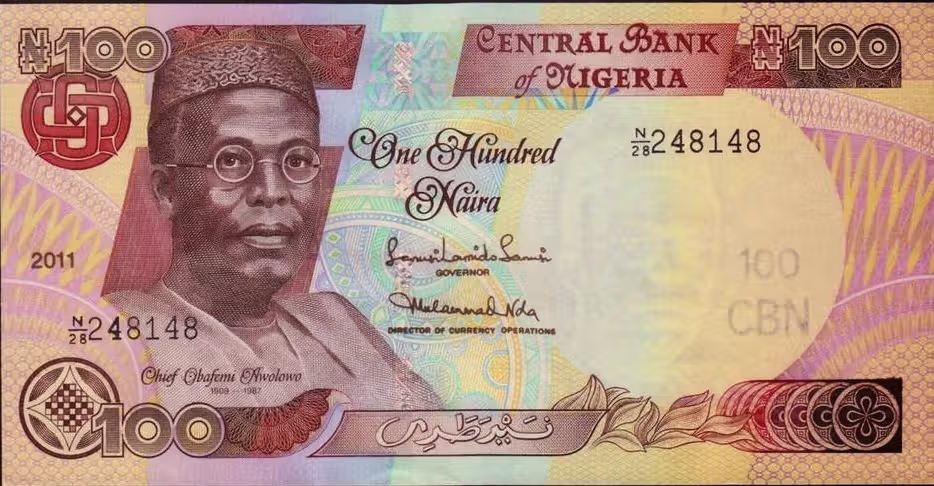
The Central Bank of Nigeria (CBN) has attributed the growing scarcity of N100 and N200 notes across the country to the rapid adoption of digital payment systems and the declining purchasing power of lower-denomination currency. Speaking after the Monetary Policy Committee (MPC) meeting in Abuja on Tuesday, CBN Governor Olayemi Cardoso reassured Nigerians that the affected notes remain legal tender and have not been withdrawn from circulation.
Addressing concerns over the apparent disappearance of lower-value naira notes from daily transactions, Cardoso explained that the trend is largely driven by changing consumer behaviour. According to him, more Nigerians are embracing digital banking channels, mobile transfers, and other cashless payment options, reducing the demand for physical cash, particularly lower denominations such as N100 and N200 notes.
The CBN governor noted that inflation and currency depreciation have also weakened the purchasing power of these notes, making them less practical for everyday transactions. As a result, fewer people are requesting or using them, leading to reduced circulation. He emphasized that the apex bank continues to monitor currency demand and supply and has no plans to discontinue any denomination unless officially announced.
On the broader economic outlook, Cardoso reaffirmed the CBN’s commitment to achieving single-digit inflation despite recent global and domestic economic challenges. He highlighted that Nigeria had recorded 11 consecutive months of disinflation before external shocks disrupted the expected pace of progress. Nevertheless, he expressed confidence that the country remains on course toward improved price stability in the coming years.
Cardoso also responded to recent comments by the International Monetary Fund (IMF) suggesting that the naira is undervalued. He maintained that Nigeria’s exchange rate should be determined by market forces rather than fixed targets. The CBN, he said, remains focused on sustaining a transparent and liquid foreign exchange market, adding that increasing market turnover and investor confidence are positive signs that ongoing reforms are yielding results.
source: The cable