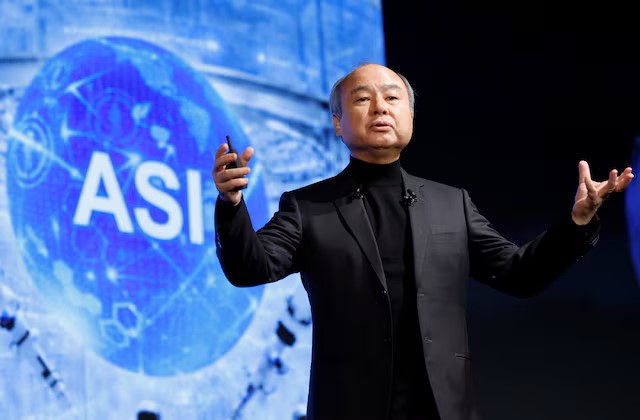
SoftBank Group CEO Masayoshi Son has made a bold prediction about the future of artificial intelligence, stating that the technology will require an astonishing $5 trillion in annual investment by 2040. Speaking at SoftBank’s annual corporate conference in Tokyo, Son dismissed growing concerns about an AI investment bubble, arguing that the scale of spending needed to build the next generation of AI infrastructure is both necessary and economically justified.
According to Son, the rapid advancement of artificial intelligence will create enormous economic opportunities that far outweigh the cost of development. He projected that AI-related revenue could account for as much as 20 percent of global GDP by 2040, making yearly investments of around 800 trillion yen (approximately $5 trillion) a relatively small expense in comparison to the value generated. While he did not provide detailed calculations behind the estimate, he expressed confidence that the figure accurately reflects the future needs of the industry.
The SoftBank chief also painted a picture of a world powered by massive AI infrastructure. He predicted that AI data centres will require up to 3 terawatts of electricity by 2040—roughly 1.8 times the amount of power currently consumed worldwide. Son believes natural gas will initially play a major role in meeting this demand before nuclear fusion emerges as a cleaner and more affordable long-term energy solution. He also suggested that future energy systems could incorporate multiple technologies, including concepts currently being explored by innovators such as Elon Musk.
Perhaps the most striking part of Son’s vision was his prediction that society will transition from a “human-centric” world to an “agent-centric” one. He forecast that by 2040, as many as 100 trillion AI agents could be operating independently, making decisions, taking actions, and communicating with one another without direct human instructions. Son argued that artificial intelligence will become the dominant force shaping decision-making processes across industries and societies, fundamentally changing the role humans play in the global ecosystem.

His comments come at a time when the explosive growth of AI companies and the surge in infrastructure spending have sparked debates about sustainability and long-term returns. At the same time, governments and international organizations are racing to establish regulations for the technology. United Nations Secretary-General António Guterres recently warned that AI is advancing faster than regulators can respond, calling for stronger international cooperation to ensure its development remains safe, responsible, and beneficial to humanity. As investment in AI continues to accelerate, the debate over its opportunities, risks, and future impact is only expected to intensify.
source: nairametrics