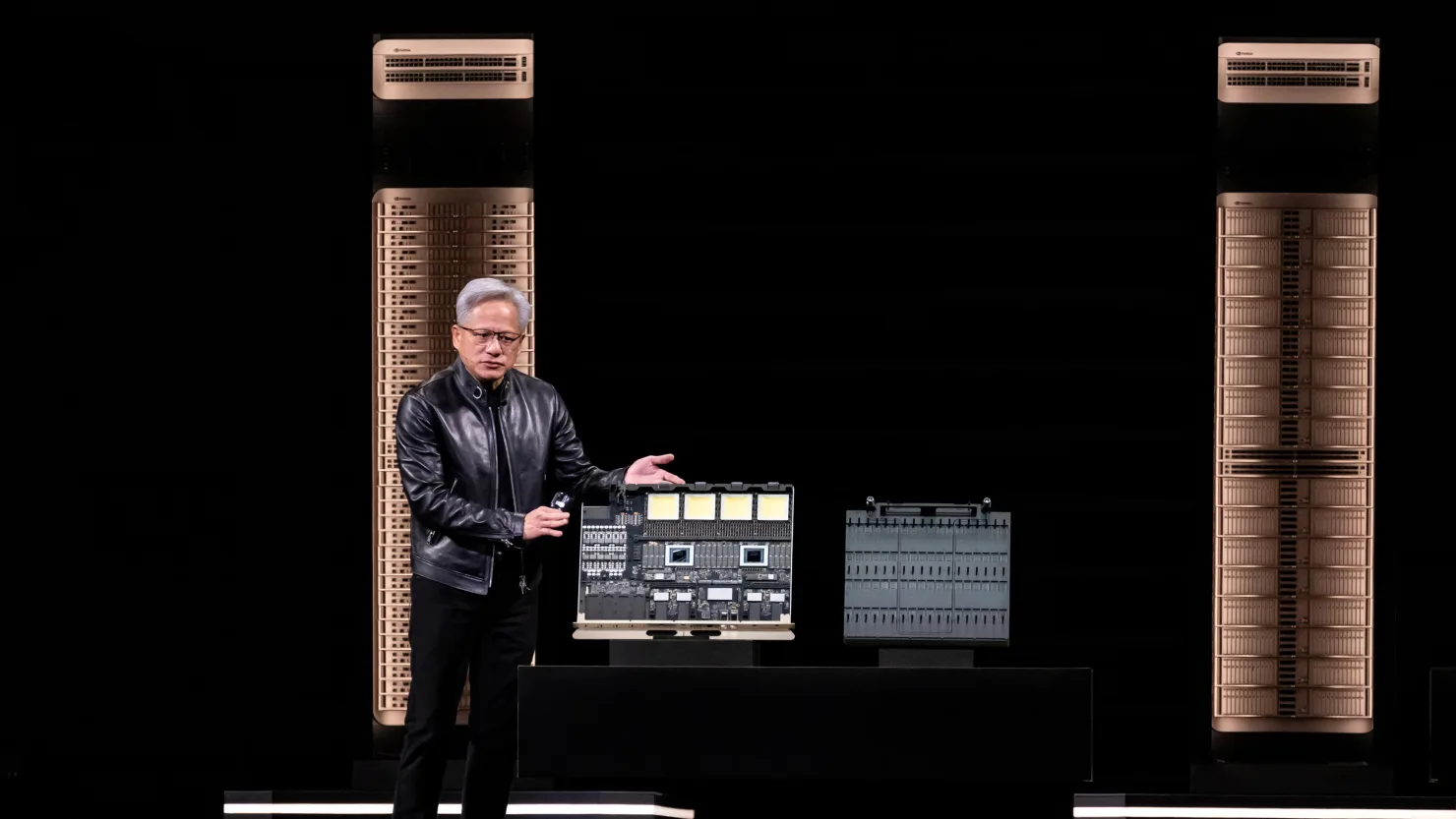
Nvidia’s ambitious plans to push the boundaries of artificial intelligence infrastructure have reportedly hit a significant roadblock, as its next-generation Kyber AI rack system is now expected to arrive in 2028 instead of 2027. According to research firm SemiAnalysis, manufacturing challenges involving a critical circuit board have forced the delay, adding fresh uncertainty to the chip giant’s aggressive product roadmap at a time when demand for AI computing power continues to surge worldwide.
The Kyber system is designed to be one of Nvidia’s most powerful AI platforms yet, capable of housing 144 advanced Rubin Ultra chips within a single rack-scale architecture. By allowing these processors to work together as one massive computing unit, the technology aims to provide the immense processing power needed to train and operate increasingly sophisticated artificial intelligence models. Its innovative vertical chip arrangement was expected to improve efficiency, increase density, and reduce communication delays between components.
However, SemiAnalysis reports that a key component known as the PCB midplane—a highly specialized multi-layer circuit board that connects critical electronic modules—has proven difficult to manufacture at scale. The research firm also suggested that Nvidia’s larger NVL576 system, which would connect multiple racks through optical networking technology, could face similar delays or be released only in limited quantities. Nvidia has not publicly commented on the report.
The setback highlights growing concerns that the company’s rapid pace of innovation may be running into real-world manufacturing constraints. Nvidia has become the dominant force behind the global AI boom, supplying the chips that power many of the world’s leading AI systems. Yet as hardware designs become increasingly complex, maintaining an annual product release cycle is becoming more challenging. Reports also indicate that a backup solution involving the combination of two existing-generation racks was abandoned after major cloud providers deemed the design too costly and difficult to operate.

Despite the reported delay, Nvidia’s broader AI business remains strong. The company’s current Rubin systems are already in full production and are expected to begin shipping later this year to major cloud computing providers, including Amazon Web Services, Microsoft Azure, and Google Cloud. Still, analysts believe the Kyber delay could create a rare opportunity for competitors such as AMD and Google to strengthen their position in the high-end AI computing market. As the race to build the future of artificial intelligence intensifies, industry watchers will be closely monitoring how Nvidia responds to this latest challenge.
source: cnbc