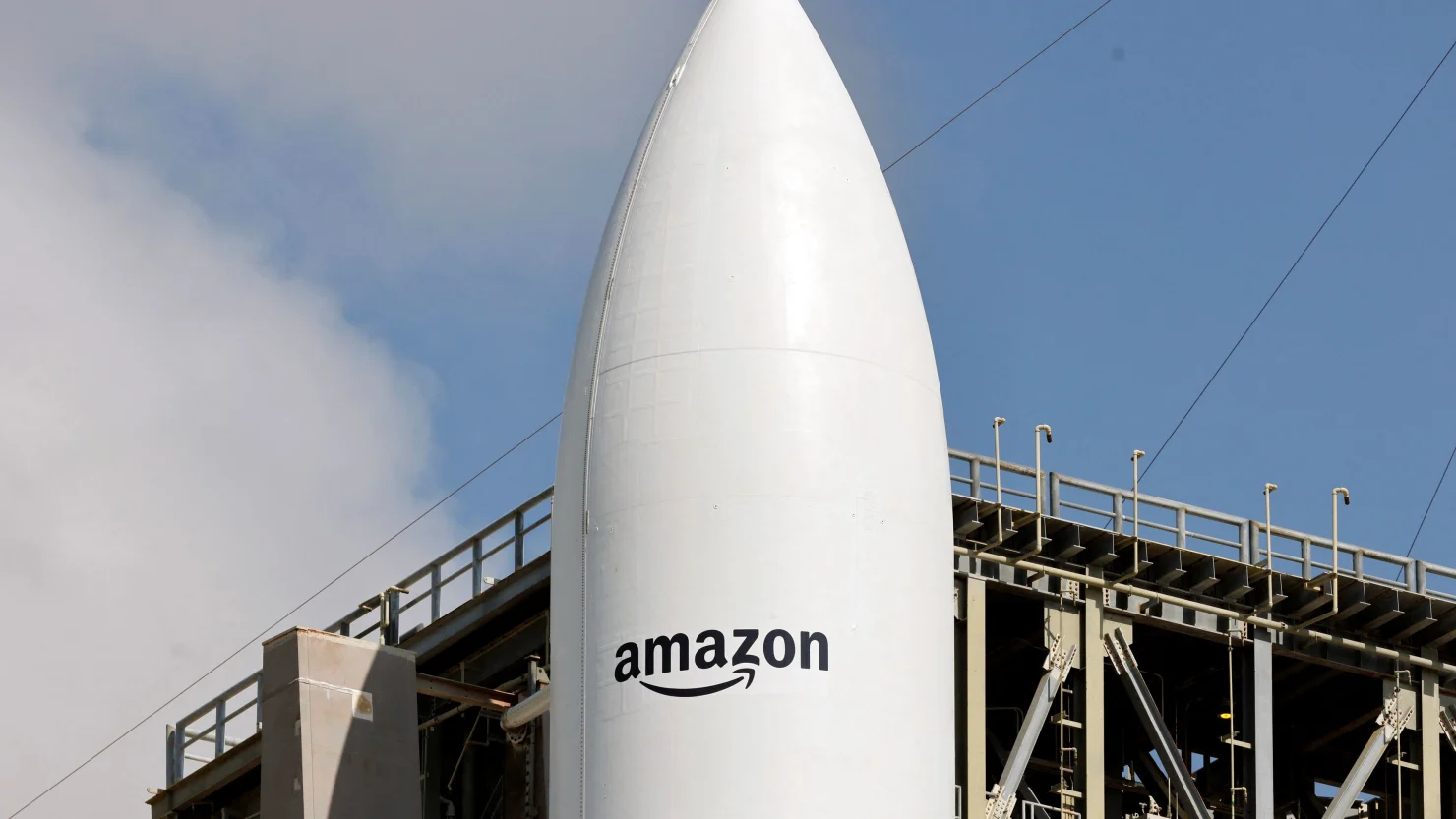
Amazon is pressing forward with its ambitious satellite internet expansion plans, even as rocket shortages and launch setbacks continue to challenge its timeline. The tech giant is working to build a massive network of roughly 7,700 satellites in low Earth orbit, a project designed to compete with SpaceX’s Starlink and deliver high-speed internet access across the globe. Despite obstacles, Amazon remains confident that its deployment strategy is gaining momentum.
The company recently acknowledged that limited rocket availability has slowed progress. In a request for an extension of regulatory deployment deadlines earlier this year, Amazon cited circumstances beyond its control, including a shortage of launch capacity. Although the company secured a record number of launch agreements in 2022 with United Launch Alliance (ULA), Arianespace, Blue Origin, and later SpaceX, delays affecting several launch providers have created unexpected bottlenecks.
Adding to the challenge, Blue Origin suffered a significant setback in May when one of its New Glenn rockets exploded during a hot-fire test on the launchpad. The incident occurred just days before the rocket was scheduled to carry a batch of Amazon satellites into orbit. Engineers are currently rebuilding the launch facility and investigating the cause of the anomaly, while industry observers closely watch the program’s recovery efforts.
Despite the setback, Amazon founder Jeff Bezos and Blue Origin CEO Dave Limp have expressed confidence that New Glenn will return to flight later this year. The partially reusable heavy-lift rocket is designed to rival SpaceX’s Starship and is capable of carrying payloads of up to 45 metric tons into low Earth orbit. Its success is considered crucial not only for Blue Origin’s ambitions but also for Amazon’s long-term satellite deployment strategy.

Looking ahead, Amazon says its next Leo mission will launch aboard ULA’s Vulcan rocket, which can carry larger satellite payloads and help accelerate deployment efforts. According to Melissa Wuerl, Leo’s director of launch systems, hundreds of satellites are already prepared for launch, and a newly completed integration facility is ready to support future missions. With these resources in place, Amazon believes it has a clear path toward expanding network coverage and rolling out initial services later this year, bringing it one step closer to becoming a major player in the global satellite internet market.
source: cnbc