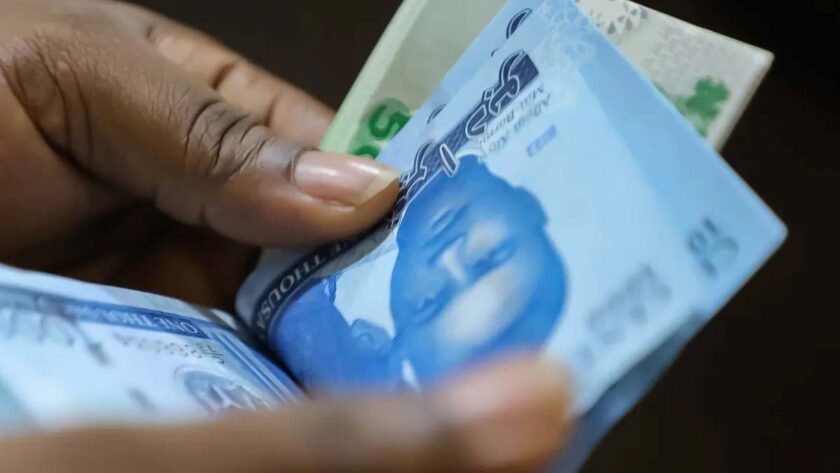
Nigeria’s money market is expected to receive a significant boost this week as approximately N500 billion from maturing Open Market Operation (OMO) bills flows back into the banking system. The anticipated inflow is expected to strengthen liquidity levels across the financial sector, providing banks with additional cash despite the Central Bank of Nigeria’s (CBN) continued efforts to absorb excess funds from the market.
The development comes after the banking sector closed the previous week with a liquidity surplus of N4.10 trillion, an increase from the N3.98 trillion recorded a week earlier. This growth was recorded even as the CBN intensified its liquidity management measures by mopping up N2.10 trillion through OMO auctions and deducting another N1.20 trillion for Federal Government bond settlements. The apex bank also fully allotted subscribed OMO bills, with stop rates settling at 20.75 per cent for the 70-day tenor and 19.99 per cent for the 140-day tenor.
Market analysts say the resilience of liquidity in the financial system highlights the strength of inflows from maturing investment instruments, which have continued to counterbalance the CBN’s aggressive tightening strategy. According to Cowry Research, the expected N500 billion OMO maturity is likely to keep the market well supplied with funds in the near term. However, analysts also anticipate fresh OMO auctions as the central bank seeks to prevent excess liquidity from fueling inflationary pressures.
Despite the abundance of cash in the banking system, short-term borrowing costs have shown signs of increasing. The Overnight lending rate rose to 22.23 per cent, while the Nigerian Interbank Offered Rate (NIBOR) advanced across several tenors, with the six-month rate reaching 23.69 per cent. Financial experts believe banks are adopting a more cautious approach, positioning themselves for possible additional liquidity sterilisation measures from the CBN in the coming weeks.

Meanwhile, the fixed-income market continued to reflect investor demand for higher yields. The Nigerian Treasury Bill True Yield (NITTY) curve moved upward across key maturities, with six-month and one-year yields climbing to 18.40 per cent and 20.84 per cent respectively. Treasury bill trading in the secondary market remained under pressure as investors sold off holdings, pushing the average Treasury bill yield up by 52 basis points week-on-week to 18.67 per cent. The trend underscores growing expectations that interest rates may remain elevated as policymakers balance liquidity management with efforts to control inflation.
source: The sun