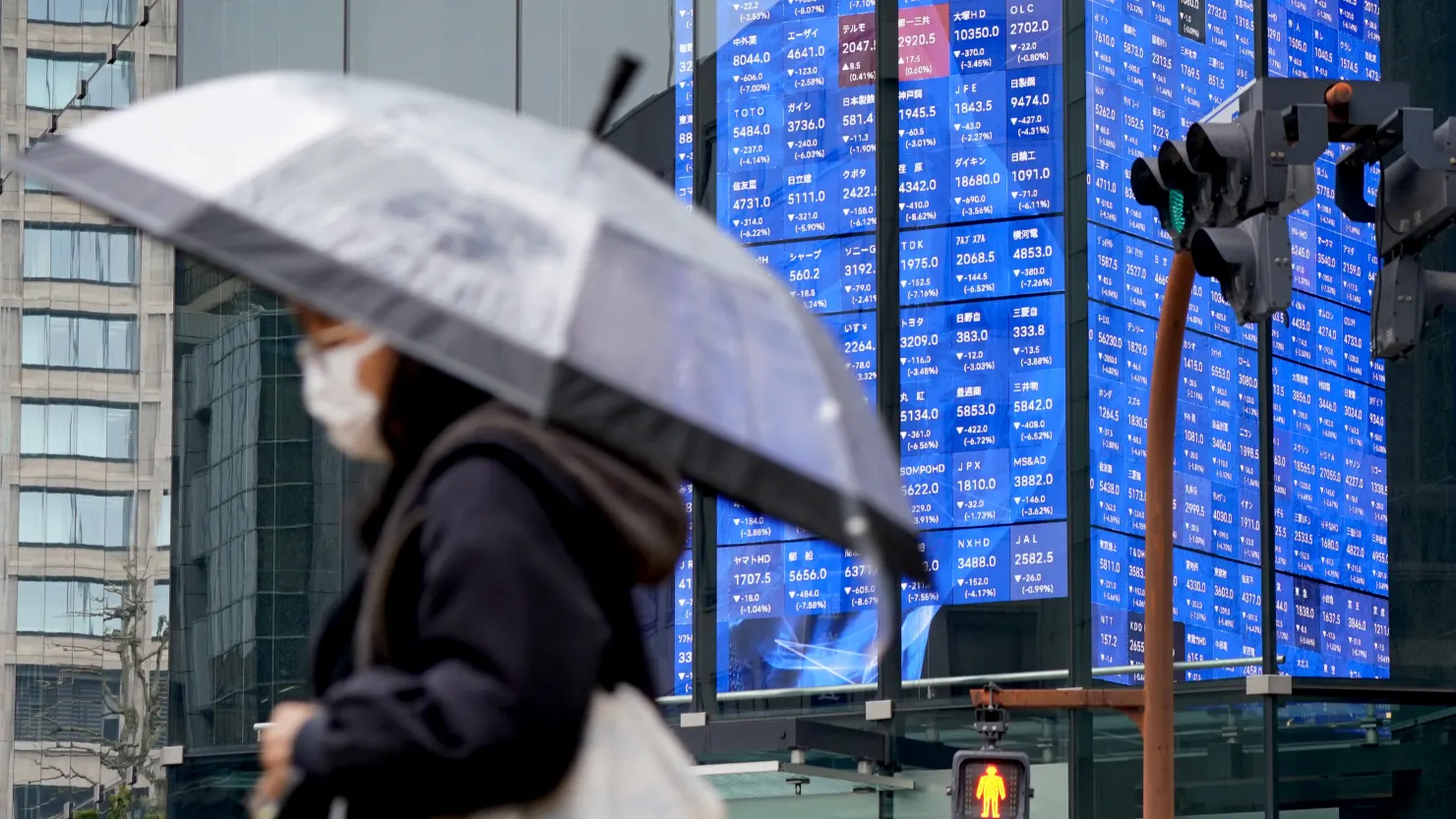
South Korean stocks suffered their steepest decline in months on Friday, leading losses across Asia as investors reacted to a sharp sell-off in artificial intelligence-linked technology shares that began on Wall Street. The benchmark Kospi index plunged 5.54% to close at 8,160.59, while the tech-heavy Kosdaq dropped 4.50%, reflecting growing concerns over the sustainability of the AI-driven market rally.
Technology giants Samsung Electronics and SK Hynix were among the hardest hit, falling 6.40% and 9.92% respectively. The decline came as investors reassessed valuations across the semiconductor sector following disappointing earnings results from U.S. chipmaker Broadcom. The company’s weaker-than-expected quarterly revenue sparked a broad retreat from AI-related stocks, sending shockwaves through global markets.
Adding to investor unease, South Korea’s labor minister called on the nation’s largest technology firms to share more of the profits generated by the semiconductor boom with employees and suppliers. The comments raised concerns about potential regulatory and labor pressures on the country’s leading chipmakers at a time when the industry is already facing heightened market volatility.
The weakness extended across the Asia-Pacific region. Japan’s Nikkei 225 fell 1.31%, Australia’s S&P/ASX 200 lost 0.70%, while Hong Kong’s Hang Seng Index declined more than 1%. Mainland China’s CSI 300 also retreated nearly 2%, underscoring the widespread impact of the technology sector downturn on regional investor sentiment.

Despite the sell-off in Asia, U.S. markets delivered a mixed performance overnight. The Dow Jones Industrial Average surged to a fresh record high as investors rotated into non-technology sectors, while the Nasdaq Composite slipped slightly amid continued pressure on chip stocks. Market sentiment was further weighed down by ongoing tensions in the Middle East, with uncertainty surrounding ceasefire negotiations fueling concerns over energy prices and broader economic stability.
source: cnbc