

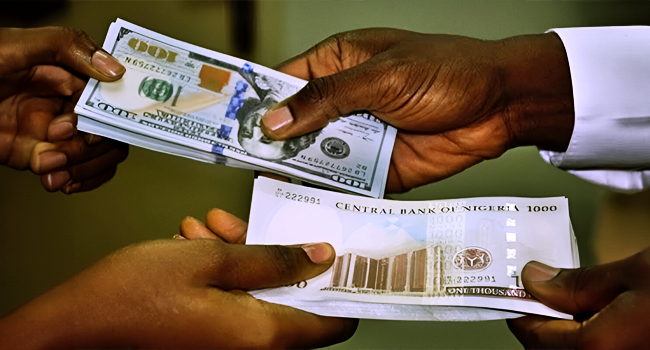
Nigeria’s currency, the naira, continued its upward momentum on Tuesday, appreciating to N1,362/$ and extending its recent gains against the United States dollar. Fresh data released by the Central Bank of Nigeria shows an improvement from N1,367.5/$ recorded on Monday, signaling a period of relative stability in the country’s foreign exchange market.
The latest movement reflects a combination of local and global factors influencing currency performance. Analysts point to improved demand and supply dynamics within Nigeria’s official FX window, as well as a broader weakening of the U.S. dollar across global markets. This shift comes as geopolitical tensions begin to ease, creating a more favorable environment for emerging market currencies like the naira.
Trading data highlights the consistency of the naira’s performance. On Tuesday, the currency traded within a range of N1,362/$ to N1,370.5/$, averaging N1,366.27/$. This follows Monday’s range of N1,362/$ to N1,374.5/$, with an average of N1,365.89/$. Compared to last week’s closing rate of N1,383/$, the naira’s current position marks a noticeable improvement, reinforcing a short-term strengthening trend in the FX market.
However, beneath the positive momentum lies a note of caution. Nigeria’s external reserves declined to $48.36 billion as of April 30, 2026, raising concerns about the sustainability of the naira’s gains. While the currency is currently benefiting from improved liquidity and investor confidence, declining reserves could pose challenges if not supported by sustained inflows and stronger economic fundamentals.

Globally, currency markets showed mixed reactions as the dollar index slipped to 98.299, reflecting a modest weakening of the U.S. currency. Gains recorded by the euro, British pound, and other major currencies were partly driven by easing geopolitical tensions, particularly around the Middle East. According to policymakers, ongoing reforms and monetary tightening measures—including aggressive open market operations—are expected to strengthen market confidence and support the naira’s trajectory in the months ahead.
source: nairametrics