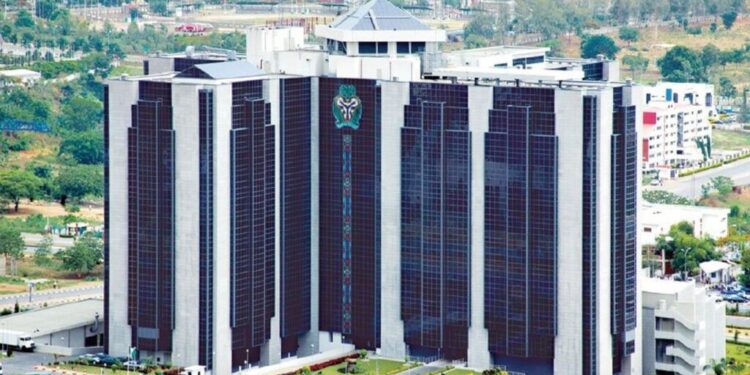
Nigeria’s economic momentum took a hit in April 2026 as the Purchasing Managers’ Index (PMI) slipped to 49.4, signaling a contraction for the first time in 16 months. The latest report from the Central Bank of Nigeria (CBN) shows the index falling below the 50-point benchmark that separates growth from decline, pointing to a slowdown across major sectors of the economy.
According to the report, the drop reflects weakening demand and reduced business activity nationwide. Key indicators painted a cautious picture: output edged down to 49.7, new orders fell more sharply to 48.4, and employment dipped to 49.6. Businesses also scaled back purchasing, with raw material inventories declining to 48.7, suggesting firms are becoming more conservative amid uncertain conditions.
A closer look at the data reveals that the slowdown was widespread. Out of 36 subsectors surveyed, 19 recorded contraction while only 16 expanded. The primary metals sector posted the steepest decline, highlighting pressure on industrial production, while forestry stood out as the fastest-growing segment. Despite the overall dip, supplier delivery times improved slightly, indicating some efficiency gains in supply chains.
The downturn was most pronounced in the industry and services sectors, both of which slipped into contraction territory. Industry PMI came in at 49.5, weighed down by declining new orders and reduced hiring. The services sector saw an even sharper slowdown, with PMI at 48.8—its first contraction in 14 months—driven by weaker activity in areas like transportation and warehousing. However, educational services offered a bright spot, recording modest growth within the sector.

In contrast, agriculture remained resilient, with PMI at 50.2, extending its growth streak to 21 consecutive months. While farming activity and employment continued to expand, signs of pressure are emerging as new orders and inventories weakened. Meanwhile, rising costs remain a concern across the economy, with both input and output prices climbing, suggesting businesses are passing higher expenses on to consumers.
The April figures mark a notable shift from March 2026, when PMI stood at 53.2, reflecting strong expansion. Analysts say the latest data underscores a fragile economic environment, where weakening demand, rising production costs, and external pressures—including geopolitical tensions—are beginning to weigh on growth prospects.