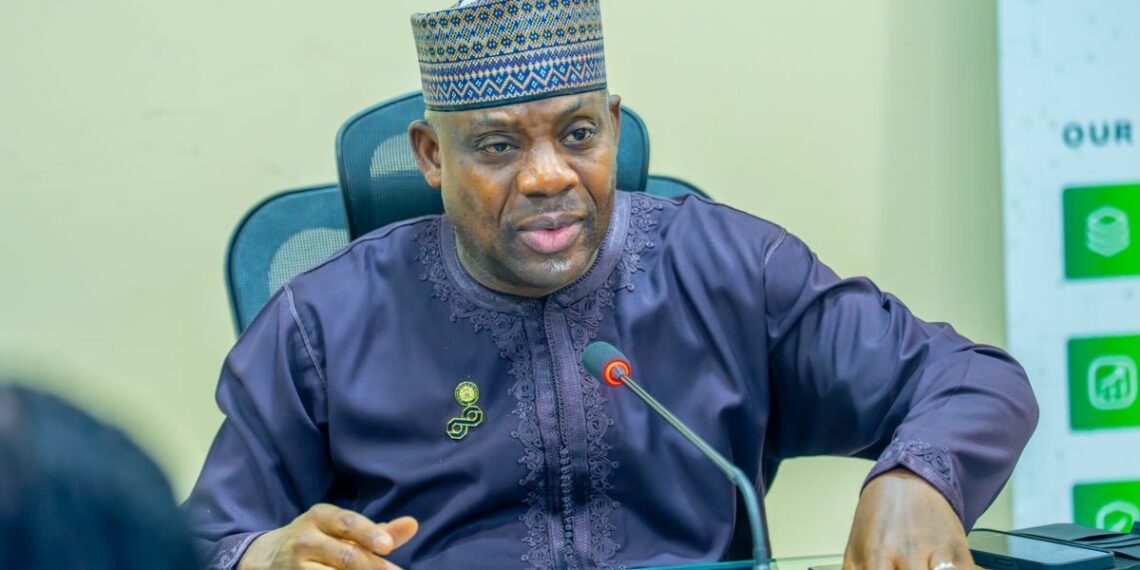
The Federal Government has unveiled a major initiative to connect all schools across Nigeria to reliable internet, aiming to strengthen digital learning and expand access to modern educational tools. The announcement was made on Wednesday by Folasade Boriowo, Director of Press and Public Relations at the Federal Ministry of Education, highlighting the government’s commitment to integrating technology into education.
The plan emerged from a high-level meeting between the Minister of Education, Dr. Tunji Alausa, and the Minister of Communications, Innovation and Digital Economy, Bosun Tijani. Alausa explained that the initiative follows a directive from President Bola Tinubu to expand digital infrastructure across key sectors, with education being a priority. The programme will leverage technology, including Artificial Intelligence (AI), to improve teaching, learning, and examination reforms.
According to Alausa, the government intends to deploy approximately 90,000 kilometres of fibre optic broadband and install 3,700 telecommunications towers, especially in rural and underserved areas. The effort builds on previous projects by the Nigerian Research and Education Network (NgREN), which had provided broadband to universities under a World Bank-funded programme. The new strategy aims to scale these efforts nationwide, ensuring every school benefits from reliable internet access.
To oversee implementation, two technical working groups have been established for tertiary and foundational/secondary schools. Additionally, the NgREN governing council will expand to include representatives from all education levels, improving coordination and accountability. The first phase is expected to yield visible results within three months, enabling students and teachers to access global knowledge resources, interactive platforms, and emerging technologies such as AI.

This initiative complements Nigeria’s broader digital education strategy, which includes the National Educational Technology (EdTech) Strategy, the eLearn platform, and the Inspire Live(s) programme. Together, these projects aim to modernize learning, support teacher training, and provide inclusive access to quality education, particularly for students in underserved communities, bridging gaps created by teacher shortages or remote locations.
source: nairametrics