

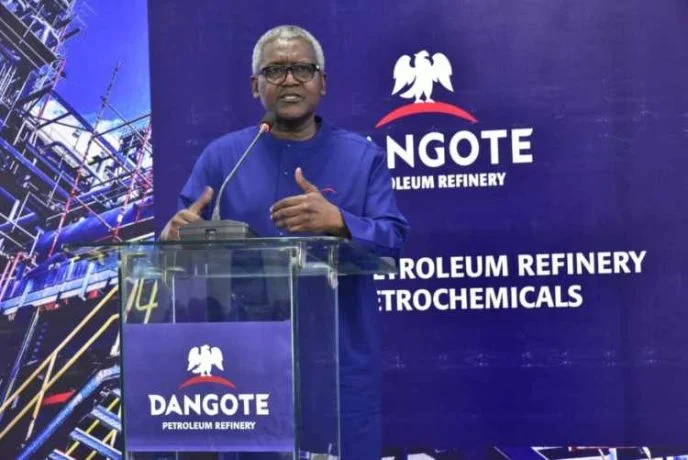
Nigeria’s energy sector is facing a major shake-up as Dangote Petroleum Refinery now supplies over 90% of the nation’s petrol, controlling an estimated N14.4 trillion market. The Federal Government has suspended petrol import licences for the year, citing sufficient domestic production, but this move has raised alarms among energy experts, economists, and Nigerian workers about potential monopoly risks and price manipulation.
Data from the Nigerian Midstream and Downstream Petroleum Regulatory Authority (NMDPRA) showed that in February 2026, local refineries supplied 36.5 million litres of petrol daily, while imports contributed just 3 million litres. The Dangote refinery, currently Nigeria’s only petrol-producing plant, accounted for approximately 92% of the total supply, marking a drastic shift from decades of import reliance. Analysts warn that such heavy dependence on a single refinery exposes the country to supply disruptions and market volatility.
Energy scholars, including Professor Emeritus Wumi Iledare and Dayo Ayoade, stressed the importance of competitive markets and regulatory oversight. While acknowledging the refinery’s capacity achievement, they cautioned that dominance by one player could trigger opportunistic pricing or logistical advantages that harm consumers. Similarly, economists and labour unions have urged the government to monitor the market closely, implement short-term price controls if necessary, and encourage additional refineries to prevent monopoly behavior.
Industry leaders, including Jeremiah Olatide of petroleumprice.ng, recommended a more balanced supply structure—ideally 70% locally refined petrol and 30% imports—to reduce energy risks and protect national consumption. Critics of the import suspension argue that artificially boosting Dangote’s market share could distort pricing, whereas gradual competition combined with access to crude in naira would naturally stabilize the market. The consensus among experts is that Nigeria’s long-term energy security depends on fostering multiple operational refineries and preventing over-reliance on a single supplier.

The NMDPRA reaffirmed that Nigeria must sustain domestic refining gains, while Finance Minister Wale Edun emphasized minimal government interference in petrol pricing, reserving intervention as a last resort. Meanwhile, the International Energy Agency announced a 400 million-barrel release of emergency oil stocks amid the US-Israel-Iran conflict, highlighting the global supply risks affecting local markets. For Nigerian consumers, petrol prices have begun to reflect a recent N100 gantry price reduction, though experts caution that structural reforms are essential to prevent future monopoly-driven price surges.
source: punch