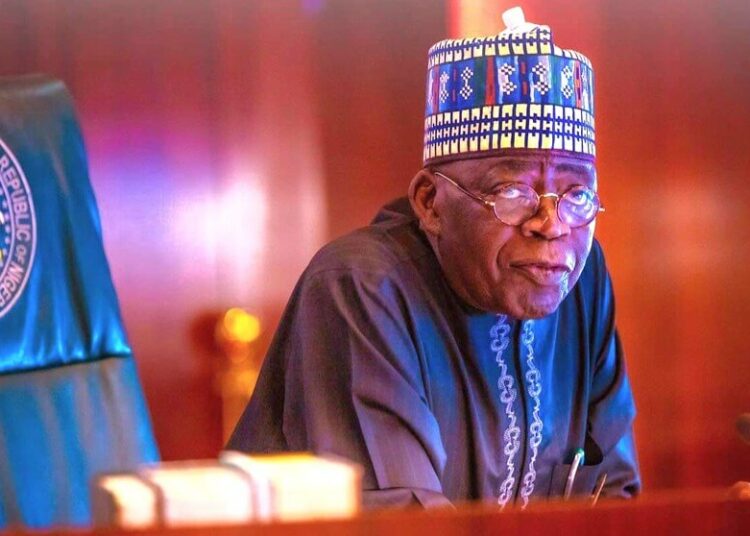
President Bola Tinubu has hailed recent reforms in Nigeria’s oil and gas sector as transformative, saying they have ended years of underinvestment and attracted over $8 billion in final investment decisions (FIDs) and up to $10 billion in capital inflows. Speaking at the opening of the 9th Nigeria International Energy Summit (NIES 2026) in Abuja, Tinubu highlighted how divestments by international oil companies (IOCs) have propelled indigenous production beyond 50 percent over the past year.
Represented by Vice President Kashim Shettima, Tinubu described the sector as “rich in potential, yet constrained by inefficiencies and uncertainty” when his administration took office in May 2023. He emphasized the importance of energy not only as an economic resource but as a catalyst for national security, industrial growth, and social inclusion. “Energy is central to stability and prosperity,” he said, underlining the government’s commitment to building a transparent, sustainable, and competitive energy system.
The President outlined key reforms, including the full implementation of the Petroleum Industry Act (PIA) and digital licensing rounds for the upstream sector. These measures, coupled with incentives for cost efficiency and streamlined approvals, have revived upstream activity, increasing the rig count from eight in 2021 to 69 by late 2025. Tinubu also announced that Nigeria’s crude production has risen to around 1.6 million barrels per day, with long-term ambitions targeting 3 million barrels per day and 12 million cubic feet of gas per day by 2030.
Officials at the summit, including Minister of State for Petroleum Resources Heineken Lokpobiri, highlighted the country’s newfound investment readiness. Major FIDs in 2025 included Shell’s $5 billion Bonga North project and TotalEnergies’ $550 million Ubeta project, alongside new field development plans totaling $18.2 billion. Lokpobiri stressed that asset transfers from IOCs to indigenous companies are boosting local ownership and production by 200,000 barrels per day, marking a historic shift in Nigeria’s energy landscape.

The summit also emphasized regional collaboration and the importance of processing Africa’s resources domestically. With domestic gas supply exceeding two billion standard cubic feet per day for the first time and reserves standing at 37 billion barrels of oil and 2.9 trillion cubic feet of gas, Nigeria is positioning itself as Africa’s strategic energy hub. Experts described the reforms as transformational, enhancing market efficiency, investor confidence, and Nigeria’s global competitiveness in energy.
source: Leadership