

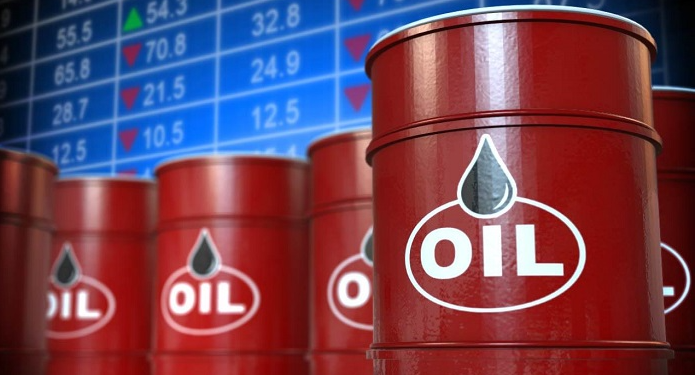
Global oil prices fell sharply on Wednesday, dipping below Nigeria’s 2026 budget benchmark of $64.85 per barrel, raising concerns over the country’s fiscal stability. Analysts attribute the decline to fears of an oversupplied market, combined with renewed geopolitical tensions, which have unsettled investors and amplified volatility in the crude oil market. Brent crude slipped toward $64 per barrel, while US West Texas Intermediate (WTI) traded below $60 per barrel.
The downward trend has been fueled by expectations of sustained high production from major oil-exporting nations. According to reports, daily crude output averaged 1.68 million barrels in the second quarter of 2025, with traders closely monitoring Venezuelan exports, which may add more barrels to an already saturated market. The International Energy Agency (IEA) also indicated that global oil and gas prices could face downward pressure for the next three to four years due to excess supply from the United States and other key producers.
Nigeria’s heavy reliance on oil revenue makes the country particularly vulnerable to price swings. Crude exports contribute significantly to government revenue and foreign exchange earnings. The Federal Executive Council (FEC) has pegged the 2026 oil price benchmark at $64.85 per barrel, with an ambitious production target of 2.6 million barrels per day. However, budgeting assumes a more conservative production of 1.8 million barrels per day due to persistent challenges like pipeline vandalism, oil theft, and underinvestment in infrastructure.
Beyond supply concerns, geopolitical tensions have also added pressure to oil markets. Recent US interventions and disputes, including remarks concerning Greenland and threatened tariffs on European countries, have dampened risk appetite, contributing to the bearish sentiment. While some parts of the physical oil market show short-term tightness, analysts warn that broader oversupply risks continue to dominate expectations for 2026.

If crude prices remain below Nigeria’s benchmark, the country could face difficult fiscal trade-offs. Budget deficits may widen, borrowing could increase, and planned capital expenditures may be curtailed. Economists emphasize that prolonged weakness in oil prices could threaten foreign exchange inflows and place additional strain on public finances, making careful monitoring of global supply and geopolitical developments essential for the year ahead.
source: nairametrics