

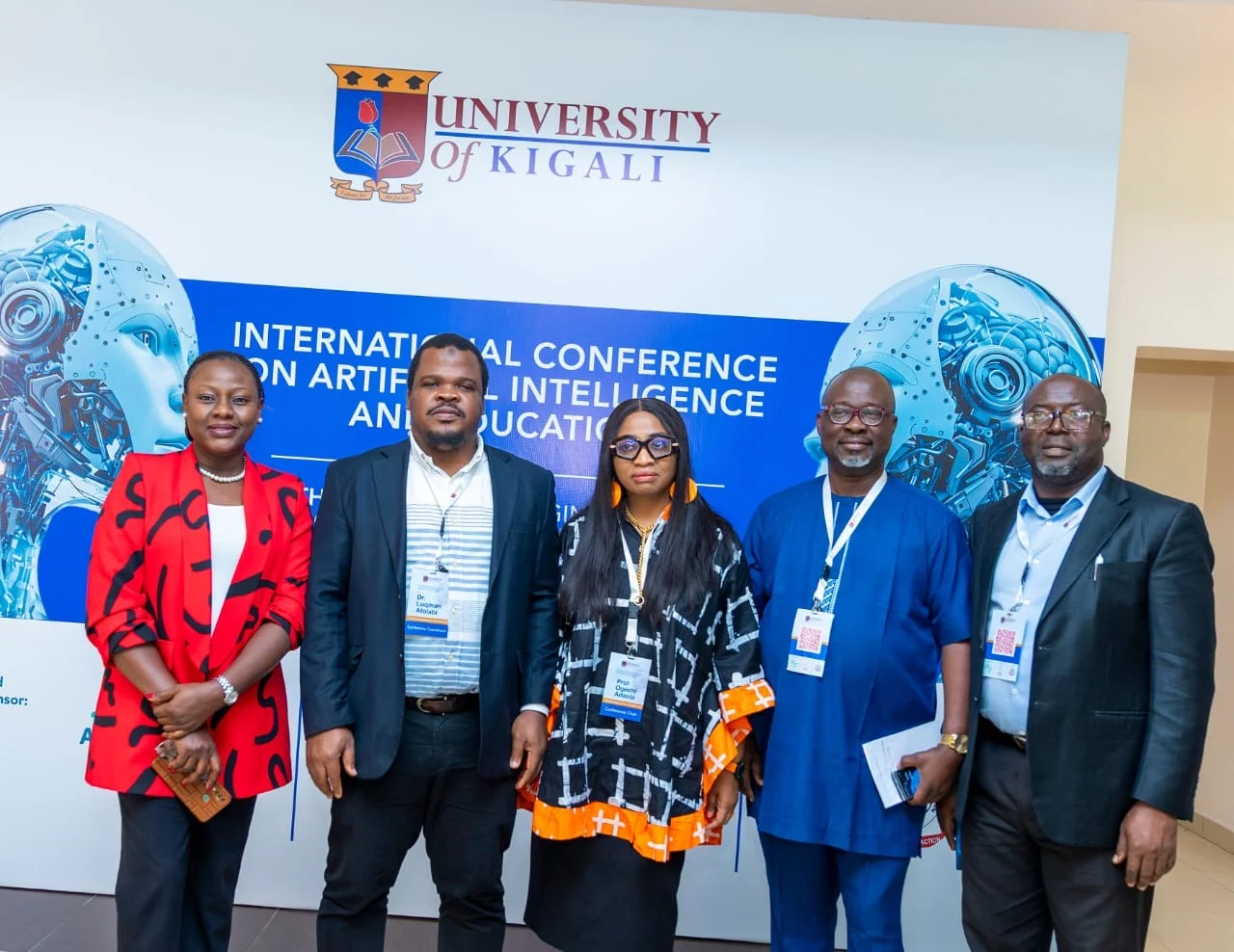
Artificial intelligence (AI) is set to be the driving force behind the African Continental Free Trade Area (AfCFTA), reshaping cross-border trade across the continent, according to Dr Luqman Afolabi, a Senior Lecturer in International Economics and Development at the University of Kigali. Speaking at the International Conference on Artificial Intelligence and Education (ICAIED) in Kigali, Afolabi emphasized that Africa’s economic transformation increasingly depends on digital “soft infrastructure” such as data systems, digital payment platforms, and AI-driven skills development rather than traditional physical infrastructure.
Afolabi highlighted how AI is already transforming African trade, particularly in logistics, energy, and finance. With Africa importing $35 billion in food annually despite holding 60% of the world’s uncultivated arable land, AI-powered logistics platforms like Kobo360 are helping reduce transport costs by up to 20%, minimising empty miles and ensuring smoother cross-border food distribution. Similarly, AI-driven predictive maintenance is enhancing the stability of regional power grids, positioning Africa to lead in green computing by powering data centers with renewable energy sources.
The financial sector is also seeing AI integration. The Pan-African Payment and Settlement System (PAPSS), developed by Afreximbank, enables instant cross-border payments in local currencies and prevents approximately $5 billion in annual losses from currency conversion. AI-powered fraud detection ensures these digital transactions remain secure, illustrating how technology can underpin a continent-wide single market.
Education remains central to these efforts. Afolabi stressed the need for AI literacy and digital trade education across all levels, from primary schools to higher education, to create a workforce capable of sustaining Africa’s digital economy. Institutions like CMU-Africa, ALU, and Afreximbank’s AFRACAD academy were cited as key examples bridging industry needs and academic talent pipelines, ensuring that human capital keeps pace with technological growth.

Deputy Vice Chancellor of the University of Kigali, Prof. Ogechi Adeola, reinforced Afolabi’s message, noting that investments in digital trade infrastructure like PAPSS and the Africa Trade Gateway are removing barriers to intra-African commerce. “AI is accelerating integration by optimizing logistics, strengthening energy systems, and securing payment platforms,” she said, adding that aligning trade infrastructure with education ensures the AfCFTA’s vision of a digitally enabled single market becomes a tangible reality.
source: punch