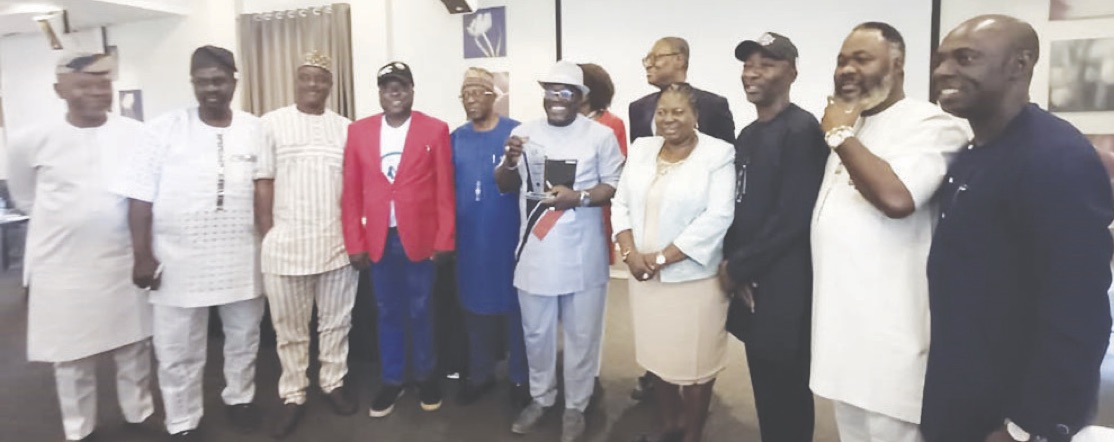
The accelerating rise of Artificial Intelligence (AI) continues to reshape global workplaces, from corporate boardrooms to factory floors, and Nigeria is not exempt. At the 2025 Workshop of the Labour Writers Association of Nigeria (LAWAN) in Ibadan, labour leaders, policymakers, and journalists sounded a clear message: the future of work must be led by humans, not hijacked by machines. Themed “The Future of Work in the Era of Artificial Intelligence: A Wake-Up Call for Stakeholders,” the forum explored how Nigeria can embrace AI responsibly without compromising workers’ welfare or job security.
The General Secretary of the Non-Academic Staff Union (NASU), Prince Peters Adeyemi, represented by former president Ivor Takor, described AI as a “double-edged sword,” capable of enhancing productivity but also threatening livelihoods if left unchecked. Adeyemi urged Nigerian workers to embrace AI as a tool for empowerment, not destruction, emphasizing that “AI cannot think for us, nor take responsibility for our work.” He warned against complacency and corruption in governance, calling for transparency and strong worker protections as the nation transitions into the digital economy.
Echoing Adeyemi’s stance, Nigeria Labour Congress (NLC) President, Joe Ajaero, represented by the Lagos NLC Chairman, cautioned that AI could deepen inequality if controlled by profit-driven corporations. He argued that “AI in the hands of big capital can become a weapon against collective bargaining and workers’ rights.” Ajaero urged unions to act decisively against digital exploitation, surveillance, and casualization — noting that the fight over the future of work is “a struggle over power, not just employment.”
Osun State Governor, Ademola Adeleke, who was honored as LAWAN’s Most Outstanding Governor of the Year, reaffirmed his commitment to labour-first governance. Represented by Soji Ajeigbe, he highlighted his administration’s clearance of salary arrears, prompt wage payments, and introduction of digital training programs to help workers adapt to a tech-driven economy. Likewise, CANMPEF Executive Secretary, Femi Oke, urged private employers to adopt ethical AI practices, stressing that “AI will not replace humans — but humans who use AI will replace those who don’t.”

Experts at the workshop, including NSITF Managing Director Barrister Oluwaseun Faleye and PenCom Director-General Omolola Oloworaran, agreed that Nigeria must urgently reform its social protection and pension systems to reflect the realities of automation. Faleye warned that “no machine can feel hunger or hope,” urging reforms to ensure innovation serves humanity. The consensus across all speakers was unmistakable: AI is not the enemy, ignorance is. For Nigeria to thrive in the coming era, both government and workers must shape technology with empathy, foresight, and human values at the core.
source: The Sun