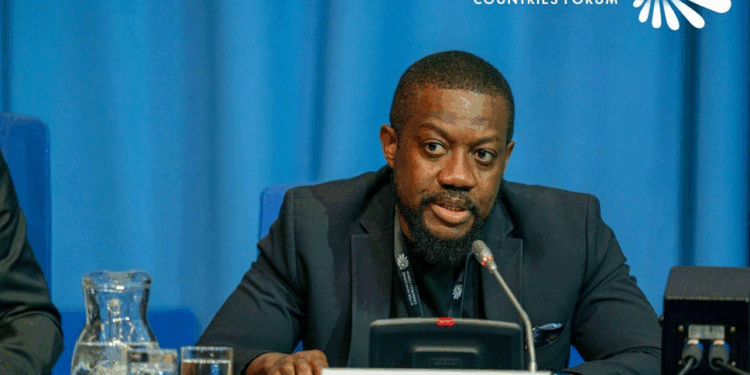
Africa stands on the brink of the Fourth Industrial Revolution, yet its digital infrastructure lags behind global standards. With the AI industry projected to reach $4.8 trillion by 2033—far exceeding the combined GDP of all 54 African nations—experts warn that without strategic investment, the continent risks digital dependence on wealthier countries. Abasiama Idaresit, CEO of Wild Fusion Holdings, emphasizes that Africa’s 17% share of the global population is paired with just 1% of global digital infrastructure, leaving the continent vulnerable to biased algorithms, digital colonization, and economic exclusion.
Artificial intelligence holds transformative potential for healthcare, education, agriculture, and defense, and it can stimulate Africa’s creative and research economies. Yet, Idaresit cautions that without local investment, AI could widen existing economic and social inequalities. “Africa risks exporting raw data only to import the finished AI-driven products,” he notes, drawing a parallel to the continent’s historic resource extraction challenges. Policymakers must take decisive steps to secure technology and data sovereignty to ensure inclusivity, sustainability, and equitable access.
Significant economic opportunities exist for Africa in the early stages of the AI value chain—particularly in data sourcing, labelling, cleaning, and preparation. Data labelling alone is a $22.46 billion global industry, growing at over 20% annually. Africa’s youthful workforce and low labor costs make it ideal for building a strong local data ecosystem, contributing to more inclusive AI products while generating economic growth. Companies like Lelapa and Sama are already demonstrating how African expertise can meet global AI demands.
To remain relevant in the AI-driven future, African governments must adopt proactive AI strategies. Countries like Nigeria, Kenya, Egypt, and South Africa have begun implementing national AI frameworks, while the African Union has launched a continental AI strategy. These initiatives aim to attract local and foreign investment, fostering innovation while protecting Africa’s digital and economic interests. As Idaresit asserts, “Our future cannot be defined by others; we must chart our own path in this era of Human-Physical interaction, IoT, AI, and robotics.”

The window for Africa to claim its place in the global AI economy is now. With global demand for inclusive and sustainable AI technologies growing, passive approaches risk leaving the continent behind. Investing in Africa’s data infrastructure, nurturing local talent, and promoting technology inclusivity are critical for securing digital sovereignty. As the African proverb cited by Idaresit reminds us, “There is no beauty but the beauty of action”—underscoring the urgency of decisive steps to ensure Africa shapes its own digital future.
source: Nairametrics