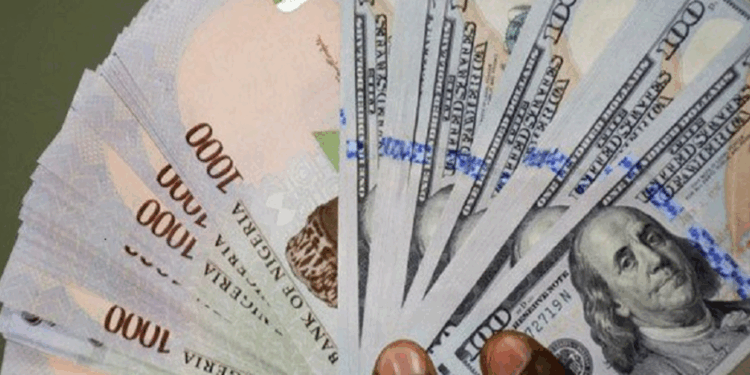
Nigeria’s foreign exchange market is seeing a rare moment of calm as licensed currency traders report that International Money Transfer Operators (IMTOs) are no longer diverting diaspora remittances away from official channels. According to multiple Bureau de Change (BDC) operators, the removal of hefty profit margins between official and parallel exchange rates has stripped away the incentives for IMTOs to route dollars through unofficial channels. This shift is being credited with the naira’s recent appreciation and a more stable supply of foreign currency.
For years, BDC operators accused some IMTOs of funneling remittances through fintechs and unlicensed online firms willing to pay more than the official market. Former CBN Governor Folashodun Shonubi had warned that such practices weakened the naira by starving the Central Bank of Nigeria’s (CBN) reserves. In 2023, only about 10% of an estimated $20 billion in remittances reached Nigeria’s forex market. Yet World Bank data shows official remittances hit $21 billion that year—nearly quadruple Nigeria’s foreign direct investment inflows.
Currency traders say arbitrage opportunities have shrunk dramatically. “Gone are the days when you see a margin of N50 or N100 between the official and unofficial market,” said Aminu Gwadebe, President of the Association of Bureau De Change Operators of Nigeria. “Sometimes you even see the parallel market lower than the official rate. Speculative and hoarding activities have really reduced because there is no profit to be made.” He added that the CBN’s willing-buyer, willing-seller model has made the market more transparent, even enabling families to plan their school fees with greater certainty.
Not everyone agrees that the problem has been solved. BDC operator Abu Ardo told Nairametrics that “some of these IMTOs still divert forex” by channeling part of their inflows through parallel routes where rates are higher. Nonetheless, he acknowledged that stronger oil-dollar inflows, renewed investor confidence, and stricter CBN oversight have helped support the naira in recent months. Ardo warned that the stability remains fragile and could unravel if supply weakens or demand spikes.

The CBN has sought to lock in these gains with reforms issued in January 2024, including prohibiting fintechs from holding IMTO licenses, allowing market-driven pricing, and expanding permissible transactions. It also granted new IMTO licenses while tightening oversight. BDC operators continue to push for access to diaspora remittances and online dollar operations to deepen liquidity. For now, traders say the forces supporting the naira—higher oil inflows, stronger remittances, reduced speculation, and CBN reforms—remain intact, but warn that sustained stability will depend on disciplined supply management and continued investor confidence.
source: nairametrics