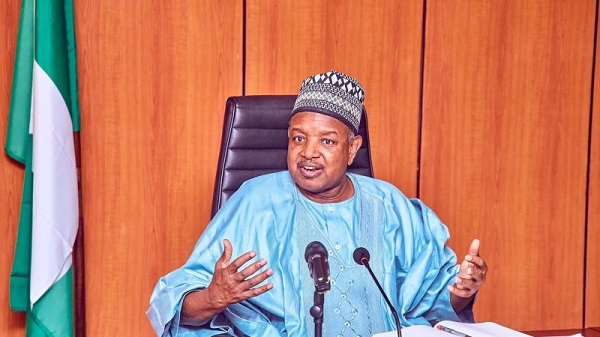
Nigeria has leveraged the World Bank’s Programme-for-Results (PforR) to increase funding and budget allocations to key sectors of the economy, Minister of Budget and Economic Planning, Sen. Abubakar Bagudu, has revealed. Speaking during a courtesy visit by a delegation from Senegal’s Ministry of Health and Social Action, Bagudu highlighted the initiative’s role in enhancing government spending effectiveness and delivering social amenities to Nigerians.
“The Programme-for-Results instrument has enabled the National Assembly and state governments to approve funding and allocate more budgets to critical sectors of the economy. It has equally demonstrated the value of government spending,” Bagudu said, emphasizing the program’s transformative impact on public resource management.
Bagudu also noted that PforR has fostered collaboration across ministries, ensuring that objectives of various result areas are achieved efficiently. “Another benefit of this instrument is the enhanced cooperation between ministries, which has ensured that the objectives of the result areas are achieved and that services are delivered more effectively,” he added.
Since its introduction in Nigeria in 2015, the PforR initiative has strengthened accountability, transparency, and sustainable programme delivery at both federal and state levels. Nigeria has successfully implemented several PforR projects in health, governance, and economic empowerment, including the Saving One Million Lives (SOML), Nigerian Community Action for Resilience (NG-CARES), and the Human Capital Opportunities for Prosperity and Equality (HOPE) programs.

The Senegalese delegation, led by Dr. Abibou Ndiaye, Technical Advisor at Senegal’s Ministry of Health, is in Nigeria on a study tour to learn from the country’s experience with PforR implementation. During the visit, project coordinators from the Ministry of Budget and Economic Planning provided detailed briefings on the design, impact, and sustainability of Nigeria’s PforR projects, aiming to replicate successful strategies in Senegal.
Source: The nation