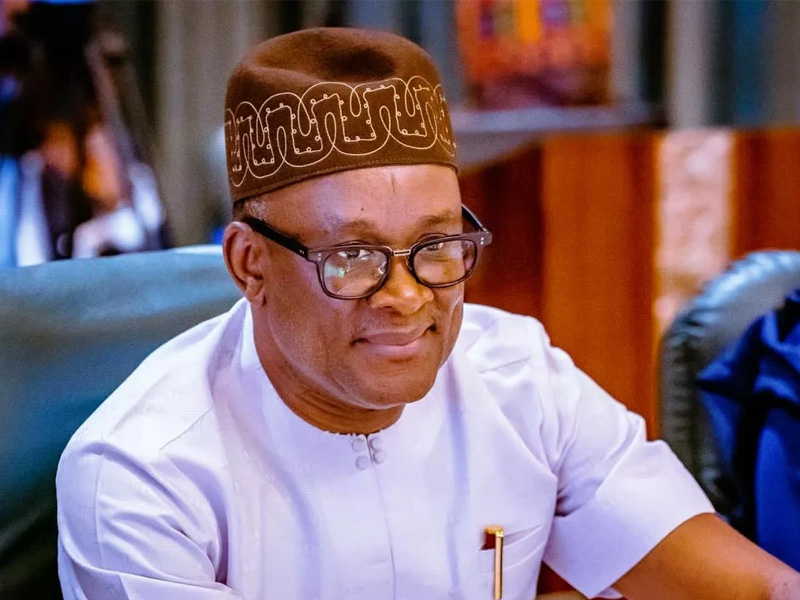
The Nigerian government is ramping up efforts to cut down its unsustainable $4 billion annual garment import bill by reviving the once-thriving local textile industry. Minister of State for Industry, Trade, and Investment, John Enoh, revealed that the Federal Government is partnering with the Bank of Industry (BoI) and other stakeholders to breathe life back into the Cotton, Textile, and Garment (CTG) sector. At a stakeholder meeting in Abuja, he emphasized that facilitating access to finance and modern machinery will be key to unlocking the sector’s full potential. The goal? Revitalize local production, reduce reliance on imports, and push the “Made-in-Nigeria” agenda.
Enoh acknowledged that the road ahead is riddled with challenges, from infrastructure issues to funding gaps. However, with initiatives like the Industrial Revolution Work Group (IRWG) now in place to provide tailored solutions to struggling industries, the outlook appears more strategic than ever. Drawing parallels with garment-exporting nations like Bangladesh and Kenya, Enoh pointed out that stimulating garment production can catalyze the entire value chain, from cotton farming to weaving and spinning.
Stakeholders also made it clear that Nigeria is missing out on massive economic opportunities. Adenike Ogunlesi, President of the Garment and Accessories Manufacturers Association of Nigeria, expressed frustration over the sector’s stagnation, despite a domestic market valued at $6.8 billion. She argued that capturing even 10% of Bangladesh’s garment export market could net Nigeria $3.3 billion in exports and create over a million jobs. To achieve this, stakeholders are calling for government-backed incentives like concessional power, access to competitive financing, and the reactivation of the CTG Fund.

Textile consultant Navdeep Sodhi further reinforced the sector’s economic potential, noting that it serves as a developmental backbone in many emerging economies. With Nigeria leading the ECOWAS market, the overreliance on cheap imports (often smuggled) is bleeding the country of revenue and jobs. He advocated for a long-term national vision to rebuild a $10 billion industry by 2035, supported by bold reforms like tax holidays, import duty waivers, and a level playing field to boost local competitiveness and affordability.