

Telcos in Sub-Saharan Africa Battle Falling ARPU Amid Global Revenue Slowdown

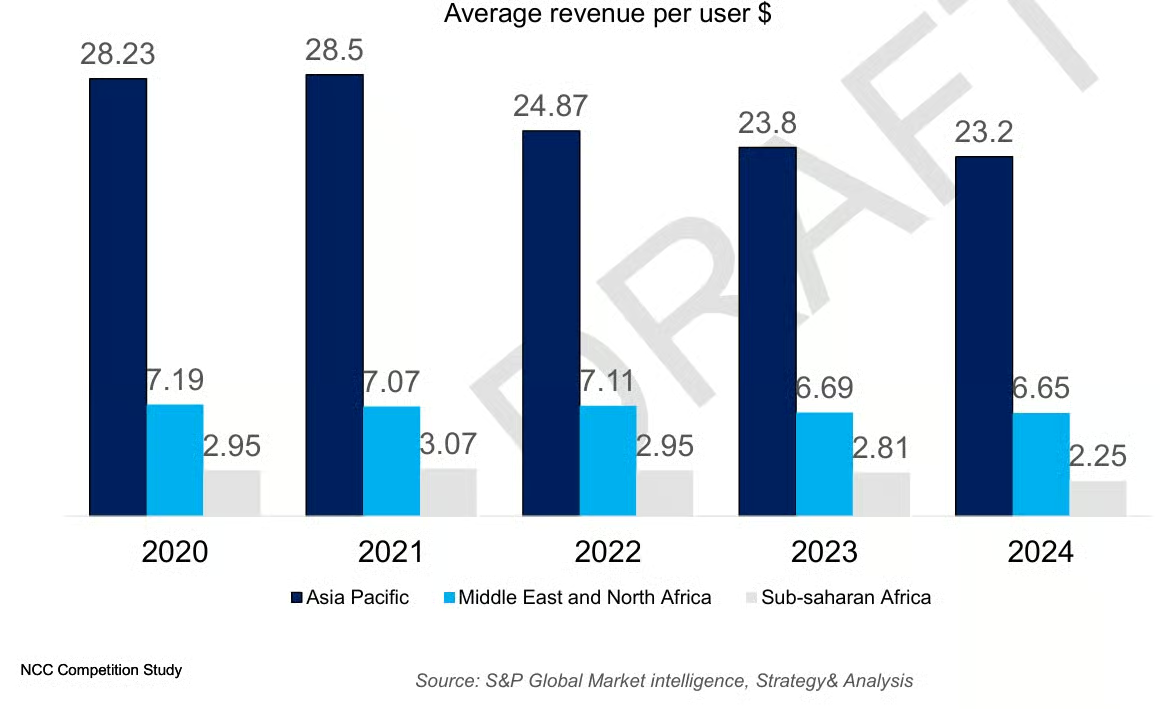
Telecom operators across Nigeria and Sub-Saharan Africa are grappling with declining average revenue per user (ARPU) despite growing subscriber numbers. A recent PwC report highlights that while telcos continue to expand their customer base, margins are being squeezed as core services like voice, SMS, and basic data become increasingly commoditized and competitive pricing pressures intensify.
The report, presented at a Nigerian Communications Commission (NCC) stakeholder workshop in Lagos, shows that ARPU in Sub-Saharan Africa has been steadily declining since 2020, even as Asia Pacific and the Middle East maintained higher growth rates. Factors such as economic inflation, low consumer incomes, and aggressive market competition are cited as key drivers behind the slow ARPU growth, which contrasts sharply with the more robust markets in Asia and MENA regions.
Globally, telecom revenue growth is expected to remain modest at 2.9% CAGR through 2028, lagging behind projected inflation rates of 3.7–5.8% per year. PwC warns that the industry’s traditional offerings are increasingly commoditized, limiting pricing power and squeezing profits. Consumers are shifting toward digital self-service options such as mobile apps, eKYC onboarding, and chatbots, reducing dependence on physical service centers and call centers.
To remain competitive, telcos are exploring entertainment-first bundles and partnerships with over-the-top (OTT) platforms. Young consumers now equate data with access to social media and streaming services, creating demand for integrated lifestyle services, including fintech, telemedicine, and content subscriptions. PwC emphasizes that bundling third-party subscriptions and upselling to existing users are essential strategies to improve ARPU and enhance customer retention in a saturated market.

The report also notes that 5G adoption is accelerating globally and is expected to dominate mobile subscriptions by 2026. Fixed Wireless Access (FWA) is highlighted as a crucial 5G use case, particularly in bridging connectivity gaps between urban and rural areas. By 2028, 5G is projected to account for 64% of mobile subscriptions, offering telcos an opportunity to bundle advanced data services with lifestyle and entertainment offerings to stay relevant and profitable.
source: The Guardian