

Nigeria Spends N1.7 Trillion on Petrol as Daily Consumption Hits 63.7 Million Litres

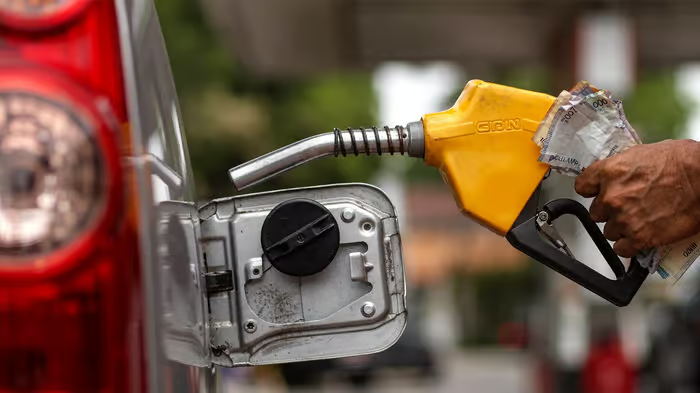
Nigeria’s daily petrol consumption surged to a record 63.7 million litres in December 2025, driving total expenditure on Premium Motor Spirit (PMS) to an estimated N1.7 trillion, according to official data. Rising domestic supply from the Dangote Petroleum Refinery and continued imports by marketers contributed to the spike, signaling renewed demand pressures on the nation’s fuel market.
The Dangote Petroleum Refinery supplied 32 million litres of PMS daily, a significant jump from November’s 19.5 million litres. President of the Dangote Group, Aliko Dangote, credited recent regulatory reforms by President Bola Tinubu, including the removal of corrupt officials in Nigeria’s downstream petroleum sector, for the refinery’s improved output. Despite a pledged target of 50 million litres per day, actual deliveries remain below expectations, operating at roughly 62% capacity.
While domestic supply increased, imports remained crucial, with oil marketing companies and the Nigerian National Petroleum Company Limited (NNPCL) bringing in 42.2 million litres daily. This shows that imported fuel still accounts for more than half of Nigeria’s total petrol supply, highlighting the continued reliance on foreign sources amid challenges at state-owned refineries.
Nigeria’s government-owned refineries—Port Harcourt, Warri, and Kaduna—remained non-operational throughout December, producing no PMS. Modular refineries, such as Watersmith, Edo, and Aradel, contributed minimal diesel volumes, with most other small-scale plants remaining offline. This underscores the continued gap in domestic production, which private refineries like Dangote are gradually helping to fill.

Dangote also announced plans to deploy 4,000 CNG-powered fuel tankers, each carrying 50,000 litres, to reduce transportation costs and improve distribution efficiency nationwide. Speaking at Dangote Cement’s Customer Celebration and Distributor Awards, he emphasized that the goal is not only industrial growth but also building Africa’s capacity to feed, power, and develop its people, reflecting a broader vision for sustainable industrialization.
source: The Guardian